
Caltech Wildlife: Sunday Birding with Pasadena Audubon Society
On Sunday, Nov. 9, Caltech hosted its inaugural campus bird walk with the Pasadena Audubon Society (PAS), a local nonprofit dedicated to birding and bird conservation. Although birding on campus has long been a cherished tradition—including the weekly bird walks led by Dr. Alan C. Cummings since 1986 (more on that in a future issue)—this was the first time the event was organized as an official PAS field trip, opening Caltech’s habitats to many local birders beyond the campus community.
The trip was co-led by Alex Coffey, PAS Field Trips Committee Chair, and me, your nerdy columnist. A total of 28 adult participants—plus a baby a few months old—joined the 2.5-hour walk, possibly setting a record for the largest birding group ever seen on campus. Most attendees were not affiliated with Caltech; many were Pasadena residents who live just blocks away but had barely explored the campus grounds.
We began promptly at 7 a.m. at the northwest corner of campus. Although daylight saving time had shifted the human clock an hour forward, the birds remained faithful to their own schedule, starting their activity at 6:20 a.m., around sunrise. The bright-eyed birders immediately identified the silhouettes and raucous calls of the local Amazon parrots. Early morning skies were busy with traffic—mourning doves, American crows and bushtits passed by our heads. A juvenile Cooper’s hawk was spotted perched high in a pine tree along Michigan Avenue.
Many fall migrants soon joined the scene. A flock of cedar waxwings swept by, and the sharp “zip-zip” calls of yellow-rumped warblers provided a soundtrack for much of the morning. The group also spotted two orange-crowned warblers and a few ruby-crowned kinglets, which are normally rather elusive as they often dart nonstop through the leaves. “Caltech is a great place for birding,” Alex noted. “The pavement runs right next to trees and shrubs, so you can get remarkably close views of species that are usually hidden deep in forests and far in open lands.”
Two Caltech students also participated. “Many corners I often ignored have cute little creatures,” said Siyuan Yin, a G4 in Medical Engineering. She suggested that fellow students look for these “cute little creatures” whenever they feel down or anxious.
A good bird walk often also features a mammal walk. Fox squirrels foraged busily among the oaks, some stuffing fallen olives into their mouths, a treat that would make humans grimace. Only a few undergraduate students were observed walking on the otherwise quiet campus, which was a reassuring sign that work-life balance was recovering after midterm exams.
For me, this was the first time leading a large birding group. I felt a bit nervous at the start, but Alex’s experience and everyone’s curiosity and enthusiasm quickly put me at ease. After four and a half years at Caltech, it was deeply satisfying to introduce the campus, with its trees, ponds and feathered residents, to people visiting for the first time. Planning the route also gave me a fresh perspective on familiar grounds. I was delighted to find that we completed the entire loop without using any stairs, a sign that the campus is quite accessible to all.
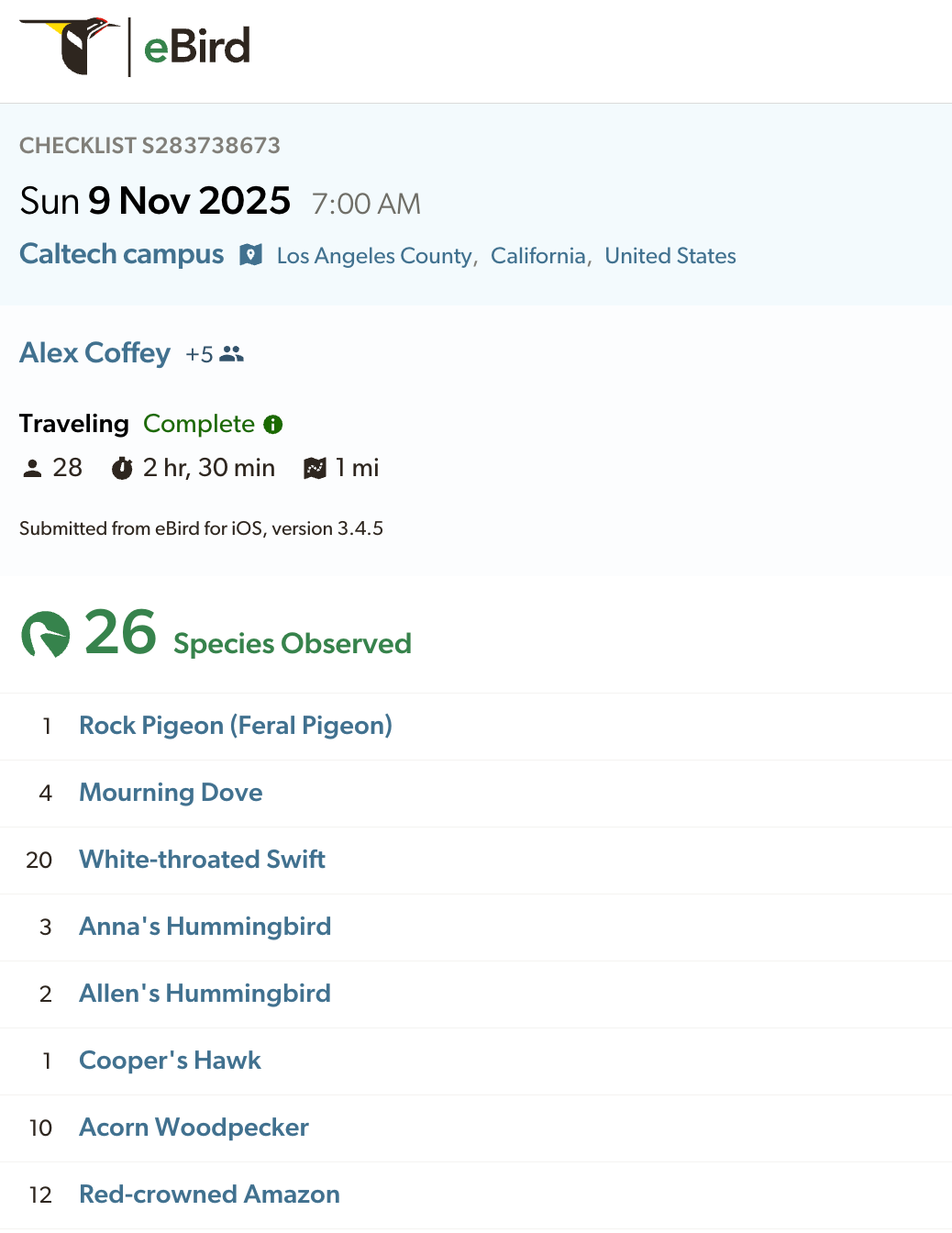 eBird trip report by Alex Coffey, leader of the walk and field trips committee chair
at PAS.
eBird trip report by Alex Coffey, leader of the walk and field trips committee chair
at PAS.
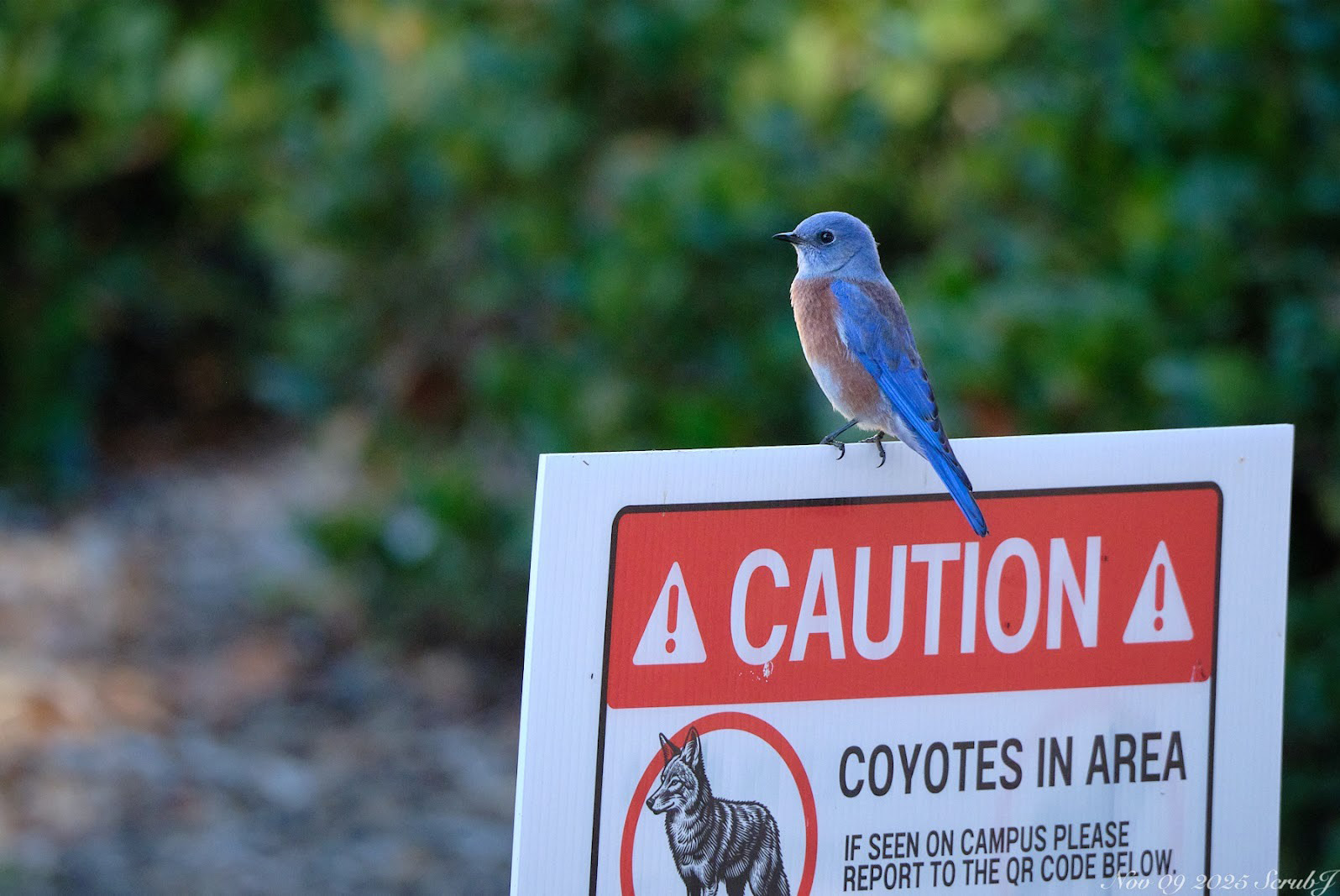 A western bluebird taught us about coyotes. (Credit: Jieyu Zheng)
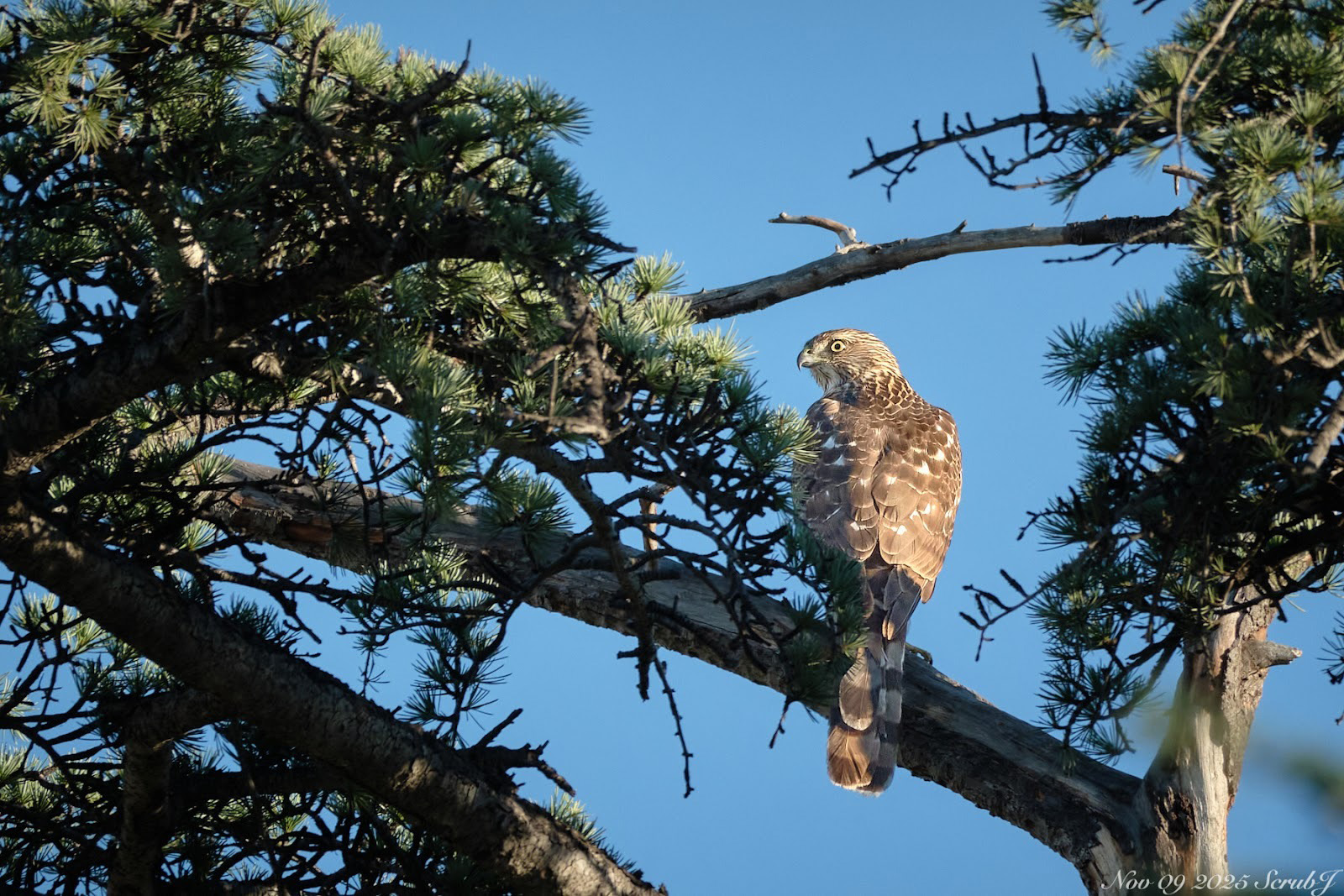 A juvenile Cooper’s hawk perched on the pine. (Credit: Jieyu Zheng)
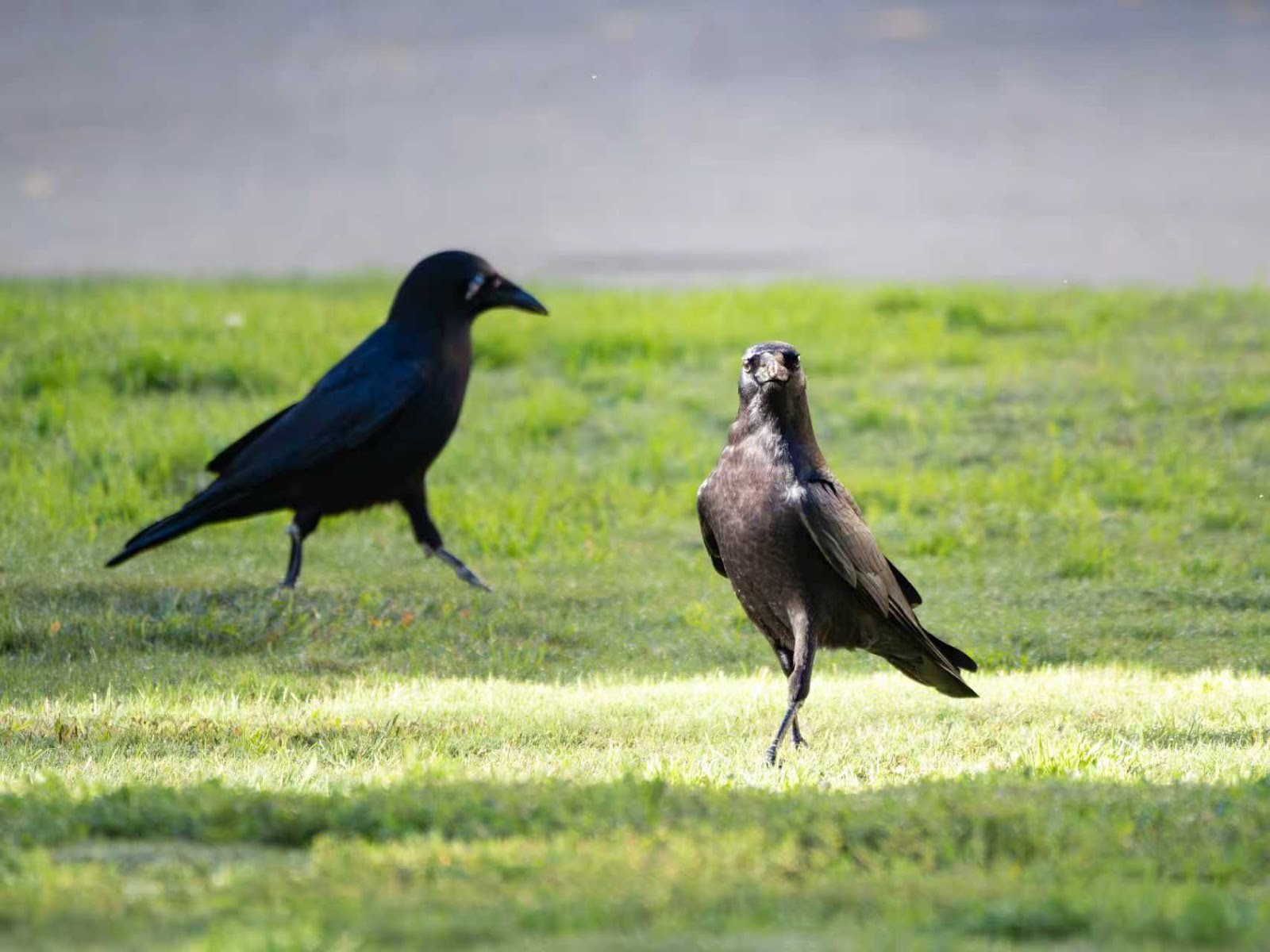 A pair of crows dance in front of Red Door. (Credit: Siyuan Yin)
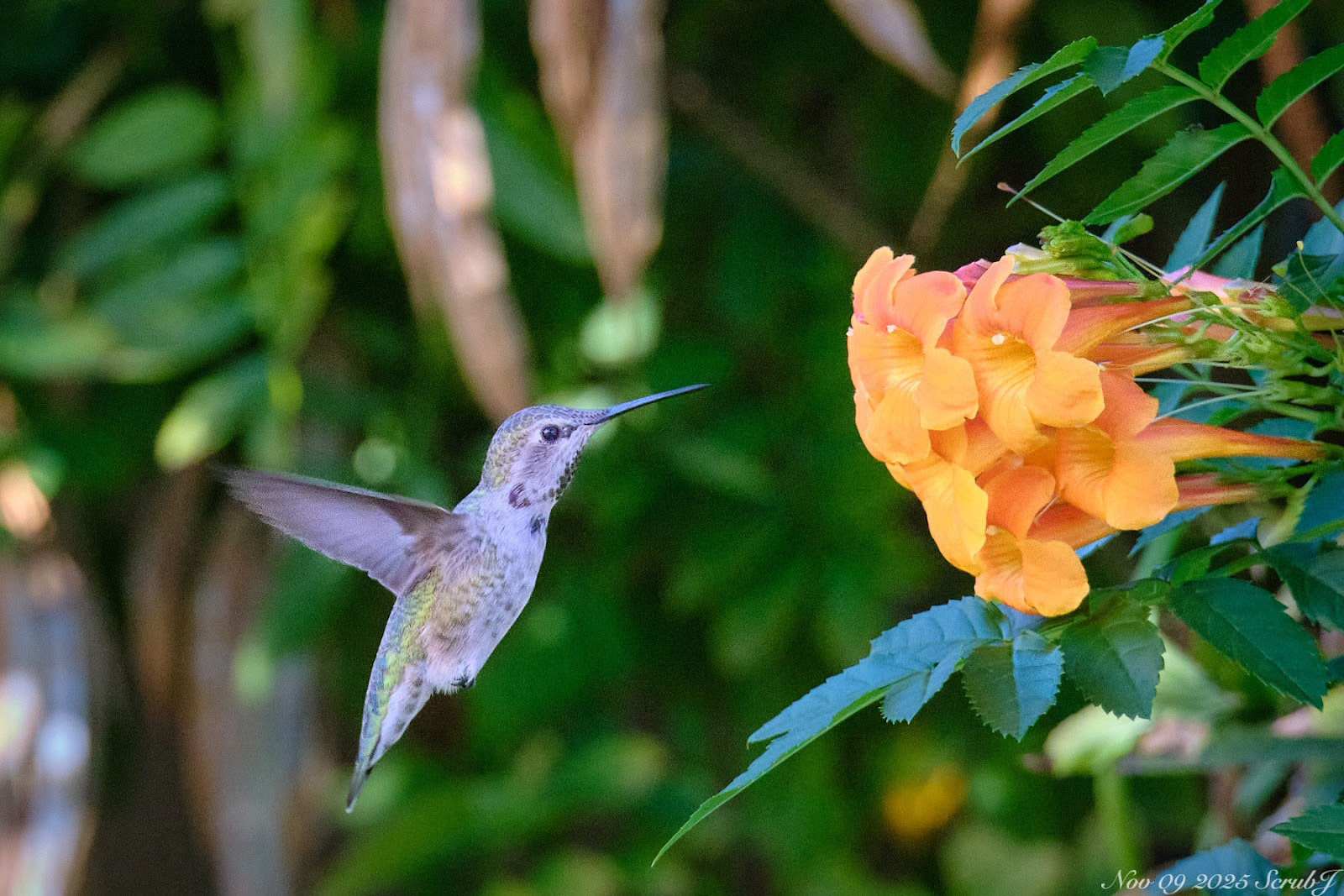 A female Anna’s hummingbird was enjoying a sip of nectar behind Caltech Hall. (Credit: Jieyu Zheng)
Note: There was a typo in the first line of the article in the print edition, this has been rectified in the online edition.