
An Evening with Professor François Tissot
On Wednesday evening, the Watson Lecture opened not with fire but with air. Professor François Tissot began by recalling a Los Angeles where smog once pressed so thick against the city that children were excused from school and pedestrians wore gas masks on Hollywood Boulevard. You could see it in the photographs: the sky collapsed into a yellow-gray ceiling, visibility reduced to a block, eyes burning. (Tissot recalled how someone, seeing in these photos gas-masked men of the 1950s, asked if they were AI-generated.)
By comparison, he noted, today’s Los Angeles feels breathable. Cleaner. Progressed. And yet, this story isn’t nearly over.
The lecture — delivered just days after the anniversary of the Eaton Fire, which destroyed or rendered uninhabitable hundreds of homes, including Tissot’s own — set out to make visible a threat that does not glow or roar or recede on satellite images. Lead contamination, Tissot argued, is an old adversary resurfacing in a new guise: dispersed not by smokestacks or gasoline pumps, but by large-scale urban fires that burn through homes, pipes, paint, electronics, and soil, redistributing a neurotoxin humanity has known about for over two millennia. Caltech, as Tissot reminded the audience, has been here before.
Environmental science at the Institute has long involved the uncomfortable work of quantifying what society would prefer remain diffuse. The evening’s introduction traced a lineage — from early smog studies to recent debris-flow modeling by Professor Mike Lamb — of scientists using technical tools to answer questions that are socially fraught precisely because the answers are definitive.
Tissot is, on paper, an unlikely figure to now lead this tradition. Trained as a cosmochemist, his research career has focused on questions whose scale dwarfs human history: the age of the Earth, the formation of the solar system, the isotopic fingerprints of ancient planetary processes. He grew up in France reading Jules Verne, imagining the universe from his bedroom, before studying at the École Normale Supérieure and later pivoting through the University of Chicago, where he assembled a chemical toolkit capable of detecting vanishingly rare isotopes. A stint at MIT — his “finishing school,” Professor John Eiler joked before introducing the Watson presenter — preceded his arrival at Caltech, “where the real business starts.”
In person, Tissot embodies a rich contradiction. He runs one of the most sophisticated isotope laboratories in the world — rooms of gleaming mass spectrometers whose sensitivity borders on the absurd — yet his intellectual posture is almost ascetically classical. He speaks of rigor, of order, of clean rooms not as luxuries but as ethical necessities. There is, too, an unmistakable pleasure in tidiness: an almost “erotic,” as Eiler put it, insistence on precision reflecting his French academic lineage as much as his scientific temperament.
That temperament has been redirected.
When the Eaton Fire swept through Pasadena’s outskirts, smoke still drifting across the city, Tissot and a small, multidisciplinary group of Caltech faculty realized that no existing agency was prepared to answer a basic question: How much toxic material do large urban fires release into the environment, and where does it go? Government funding mechanisms move too slowly for disasters measured in hours. Insurance companies, as Tissot later recounted with dark humor, are uninterested in expertise that complicates liability.
So the scientists acted anyway.
Within hours, appeals went out — not through federal channels, but through personal networks. Alumni, friends of the Institute, and private supporters responded with what Tissot described as “shocking” speed. Teams were mobilized. Samples were collected while the smoke was still in the air. Core analyses began almost immediately.
It was scientific philanthropy in its rawest form: unscripted, unsanctioned, and urgently necessary.
To explain why lead matters so profoundly, Tissot reached backward — to another Caltech figure, another stubborn scientist with a cleanroom and an inconvenient conclusion. Clair Patterson, a geochemist working in the 1950s, had set out to date the Earth. To do so, he had to eliminate background lead contamination so pervasive that it coated glassware, desks, clothing, tap water, even human skin. Patterson pioneered the modern clean laboratory — washing Pyrex in acid baths, wrapping researchers in polyethylene suits (“now we call them lab coats,” Tissot quipped) — and in 1956 produced the now-standard estimate of Earth’s age: 4.55 billion years.
That achievement was hardly the end of Patterson’s story. Instead, Patterson noticed something else: Snow samples contained ten thousand times more lead than natural geological sources could explain. The oceans were similarly enriched. The culprit, he realized, was tetraethyl lead, an additive introduced into gasoline in the 1950s to prevent engine knocking: a compound once shortlisted for chemical warfare, and whose dangers were documented as early as Roman times. Vitruvius warned of lead pipes. Pliny the Elder described “paralytic hand.” Benjamin Franklin noticed it among printers.
Industry’s response was systematic denial.
For decades, petroleum companies funded research designed not to assess safety, but to normalize exposure. Everyone has lead in their blood, they argued. Typical does not mean dangerous. Thresholds were defined by what already existed, not by what was safe. Patterson was offered funding — on the condition that he stop studying lead. When he refused, industry pressure followed him through Caltech’s administration and into federal agencies.
History, as Tissot laid it out, was not subtle. Blood levels fell in lockstep with the phaseout of leaded gasoline and lead paint. Cognitive outcomes improved. The data accumulated — over six thousand studies since 1990 — linking lead exposure to neurological, cardiovascular, reproductive, and developmental harm. Five IQ points lost, Tissot noted, may not sound dramatic. Across a population, it is enormous.
By the 1980s, Americans carried body lead burdens orders of magnitude higher than prehistoric humans. Mummies, it turned out, were cleaner than we were.
Which brings us back to fire.
Modern homes concentrate lead in ways ancient civilizations never did: in paint, solder, electronics, batteries. When these burn, lead does not disappear. It aerosolizes, settles into soil, infiltrates homes far from the flames. Children, whose developing nervous systems absorb lead more readily, face what Patterson termed “chronic lead insult”: not acute poisoning, but something quieter. More enduring.
One-third of U.S. homes now sit at the urban-wildland interface. Megafires in California have quadrupled. And yet, Tissot emphasized, there is still no systematic study of post-fire lead contamination at scale. There is only incremental work, done collaboratively, piece by piece.
This, he informed us, is the task ahead.
Tissot returned to Caltech in 2018 with a mandate to revive cosmochemistry. He built the Isotoparium — a state-of-the-art clean lab bristling with mass spectrometers — and earned tenure in 2024. With that achievement, he said, came a sharper question: what problem is worth the next decade?
His answer, forged in ash and insurance calls and community loss, was clear. Yet, Tissot was careful not to frame the work as a personal crusade: “It’s not that I have to do this research,” he clarified in the Q&A. What mattered, he emphasized, was that the research be done at all: collectively, rigorously, and soon enough to effect change.
Science, in this telling, is neither heroic nor neutral. It is an instrument — capable of healing the world, if society allows it to be used. There is already more than enough suffering, Tissot concluded. The least we can do is not add to it by pretending we do not know what we know.
The data, after all, is already in the air.
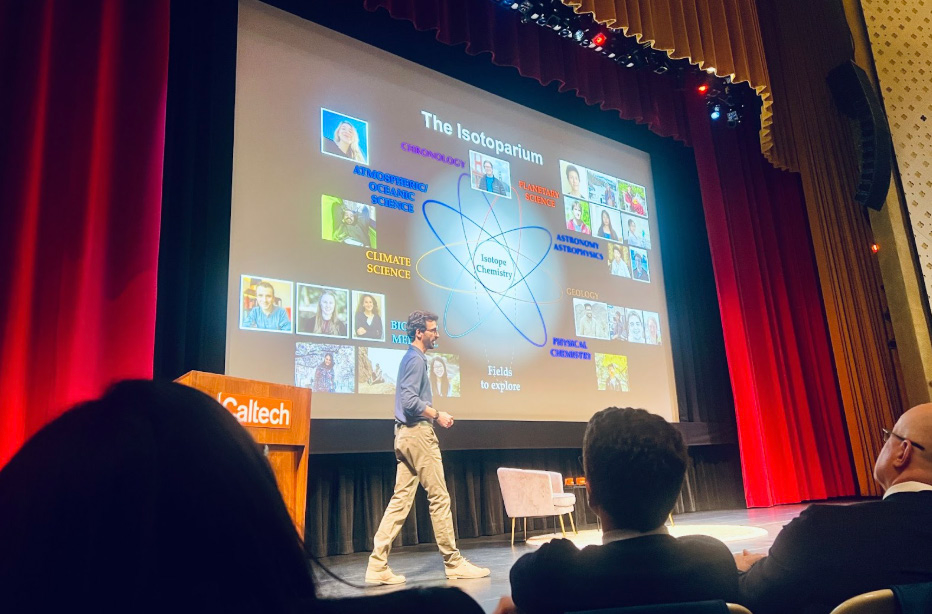
Tissot discusses his Isotoparium, a multidisciplinary collaboration of Caltech scientists studying rare isotopes. (Credit: Damian R. Wilson)
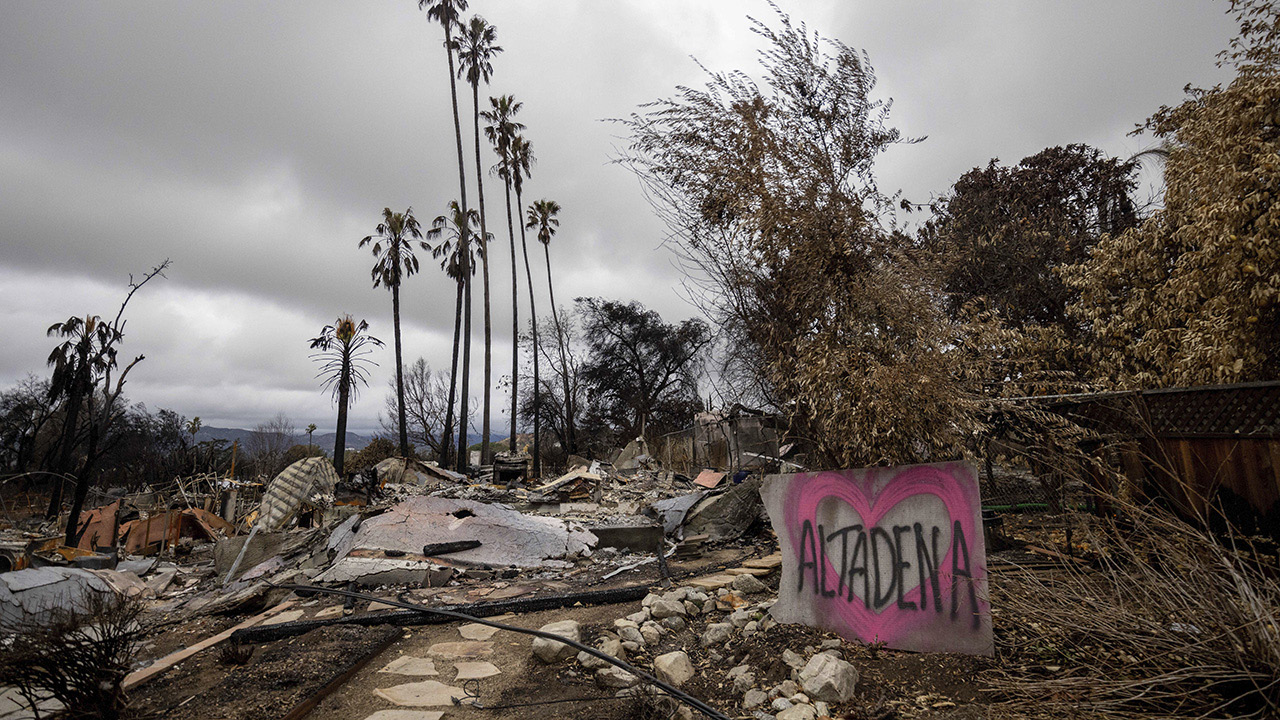
The Eaton Fire ravaged more than 14,000 acres of land in the San Gabriel Valley, destroying 6,000 homes and contaminating the area with lead and other hazardous materials. (Credit: AP)
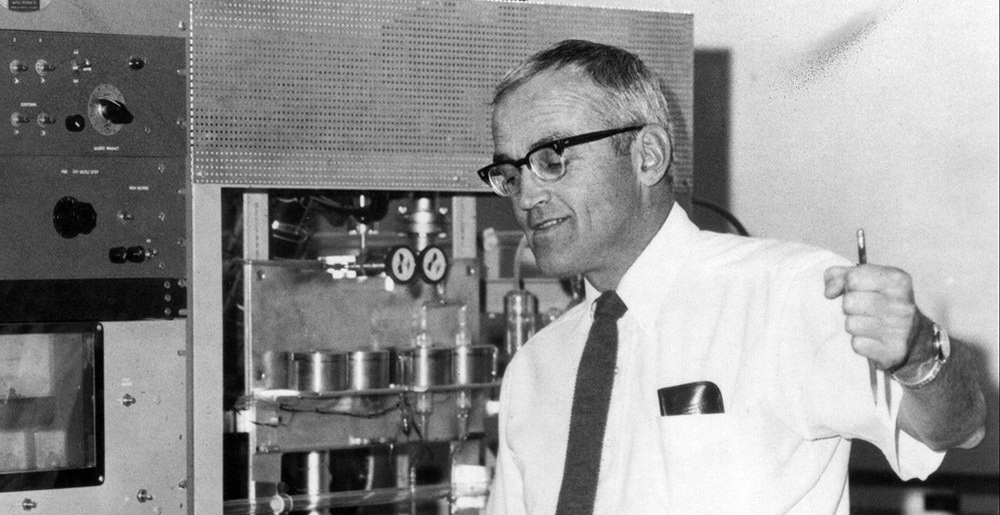
Clair Patterson, a scientific hero whom Caltech is lucky to call its own. (Credit: Caltech Archives)
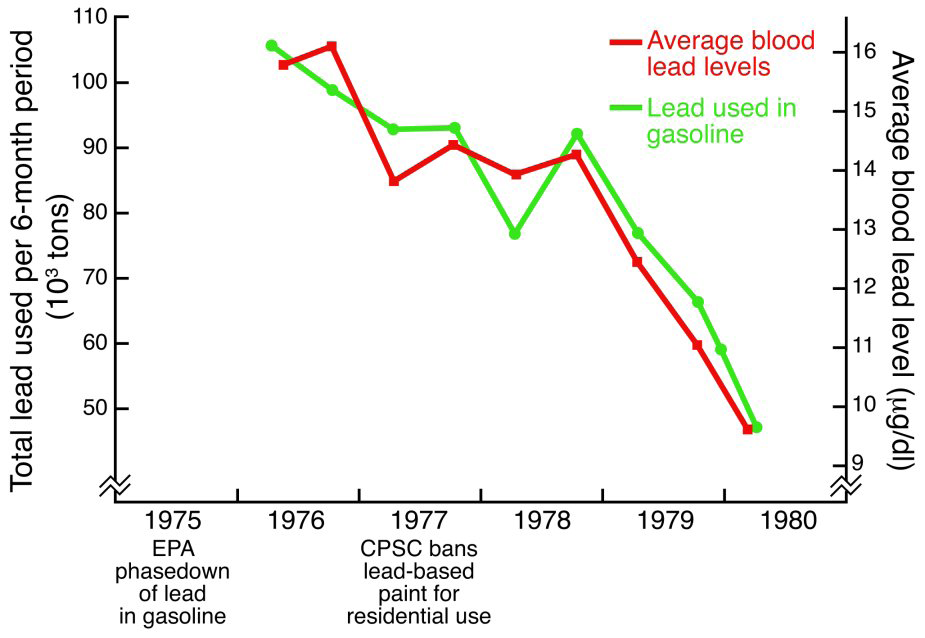
Average blood lead levels and lead use in gasoline in the late 1970s. (Credit: Journal of Clinical Investigation)
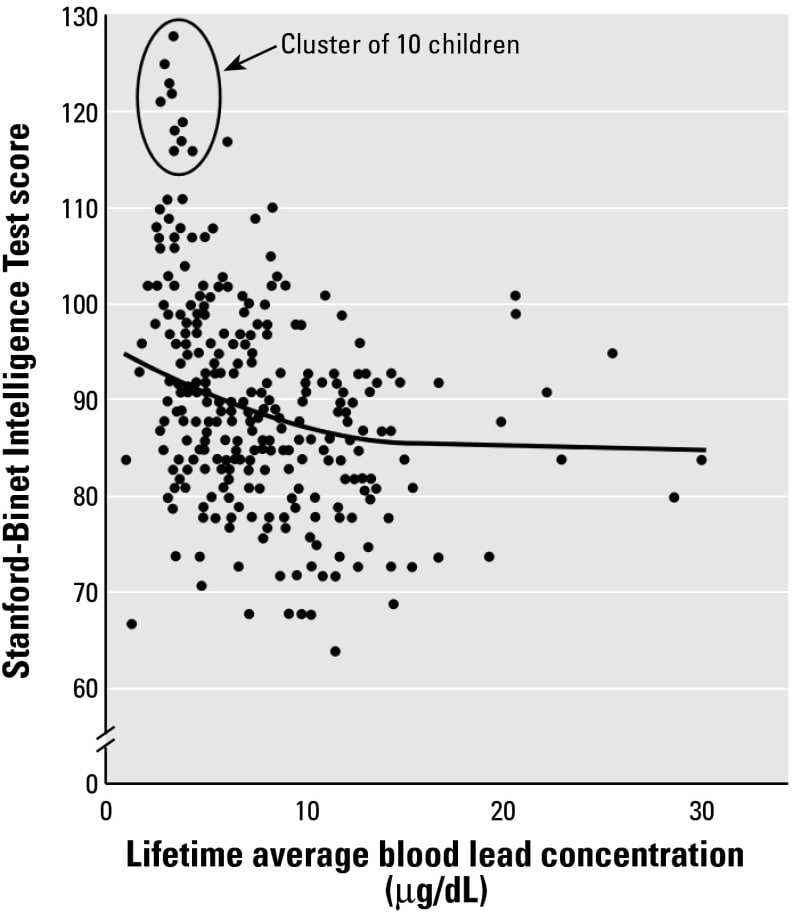
The impact of blood lead levels on intelligence in children. (Credit: Environmental Health Perspectives)
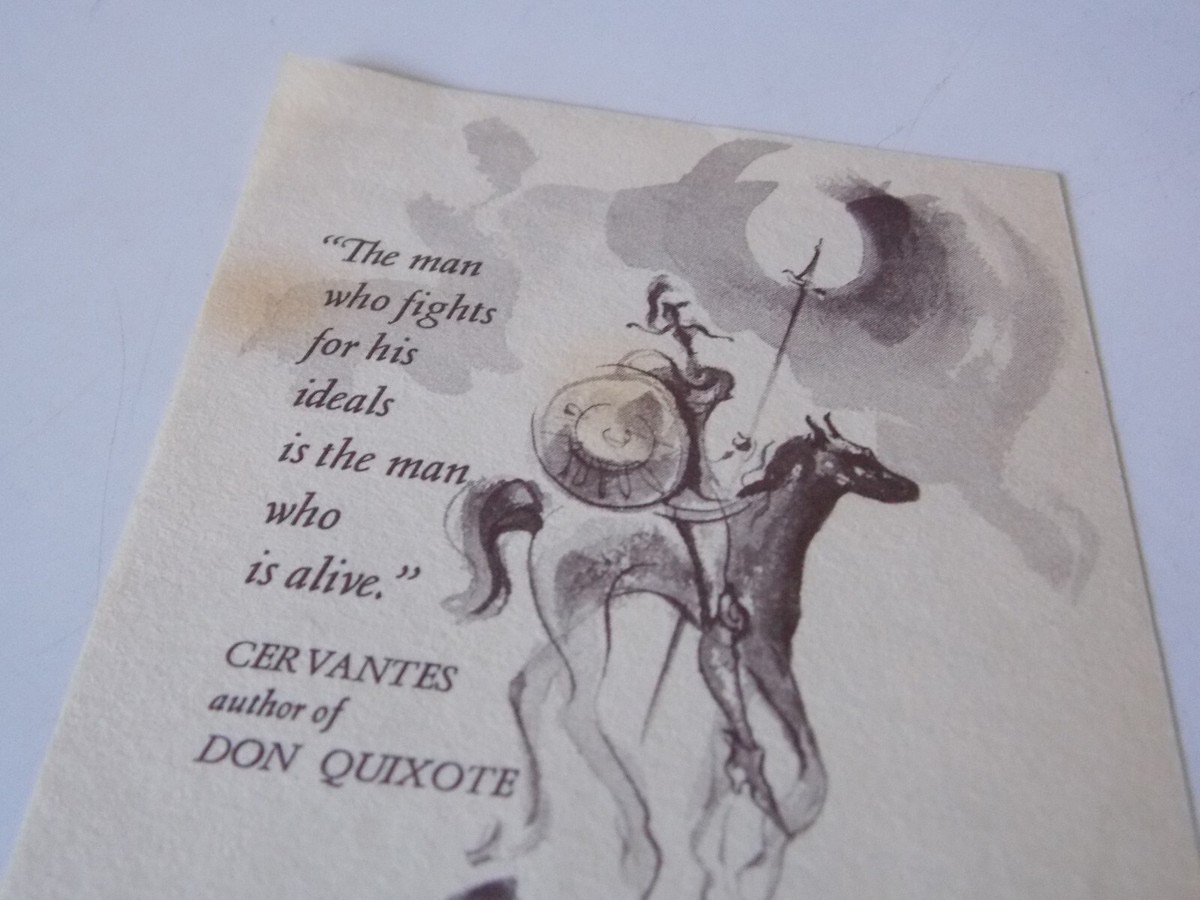
This bookplate from Don Quixote was taped on Clair Patterson’s monitor throughout his career. Wisdom for us all!