
Caltech, Killing Eve, and the Erotics of Psychopathy
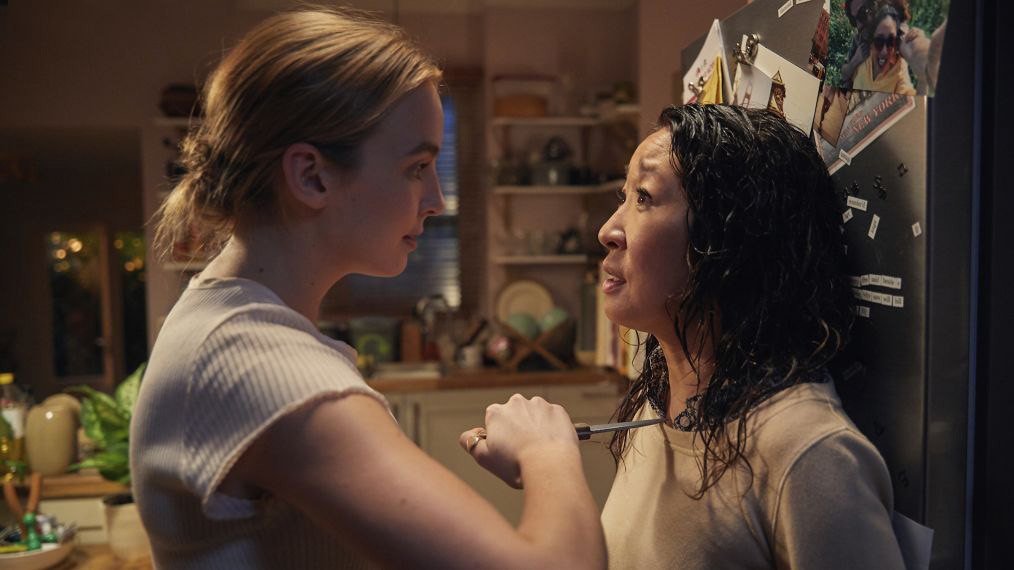
Villanelle and Eve of “Killing Eve.” I can only wholeheartedly recommend the first season — maybe the second — but God, is this show good at its best.
A particular kind of love emerges when choice is suddenly revoked. Not violently, as if someone stormed in and took your options away, but politely — through circumstance. Through geography. Through an institution that places exotic, exhausted people on 124 acres and demands of them: Make Meaning Here. Last issue’s satire understands this: the turmoil of proximity as romance, repetition as chemistry. If that’s our autopsy report, it’s worth asking what the body tells us next.
What modernity has done, especially in places like Caltech, is exchange abundance for curated scarcity. We don’t lack people; we lack variance. Everyone is intense. Everyone is tired. Everyone is socially competent in narrow, specialized ways. In this environment, desire stops looking like desire and starts looking like fascination. Who is different enough to break the loop? Who dissolves the pattern? This is where the psychopath enters — not necessarily the real one (who is typically dull, cruel, and unimaginative), but the fictional kind: hyper-articulate, precise, self-authored.
My latest binge, “Killing Eve,” understood this. The show, about a tireless MI6 operative named Eve, a prolific murderess named Villanelle, and their mutual, maddening obsession, captured queer erotic spy-thriller lightning in a bottle — briefly, but spectacularly.
Villanelle wasn’t sexy because she killed people. She was sexy because she wasn’t confused. She wanted money, blood, “chic as shit” clothes and apartments, and took them without the recursive ethical accounting that defines contemporary selfhood. She also parodied a womanhood stripped of obligation: femininity without caretaking, beauty without apology, desire without self-abnegation. A bloody feminist grotesque. Eve, by contrast, was all modern paralysis: competent, moral, deeply bored, secretly furious about it. Their fixation was not transgressive romance, but romance as escape — Villanelle as a fantasy of exit from endless self-scrutiny.
Under Phoebe Waller-Bridge, the show understood that psychopathy’s appeal lay not in violence but in clarity, and in the peculiar freedom that clarity seems to promise. That promise was dangerous, but it was also a joke. The story’s humor lay in staging that freedom as liberation, even as it quietly exposed it as aesthetic sleight of hand.
Then the show forgot what it was examining. PWB, tragically, was showrunner only for the first season. Without her, the psychopathy became decorative rather than diagnostic. The writing stopped asking why obsession feels good, insisting simply that it is. The fantasy hardened. Intensity standing in for meaning, not unlike our small-campus errors.
When the pool is shallow, we start mistaking clarity for depth and decisiveness for maturity. Someone who seems emotionally impermeable begins to look grounded. Someone who doesn’t ask many questions looks confident. What triggers this response is asymmetry: they need less from you than you need from them.
Modern love, averse to risk and starved for sensation, is vulnerable to this. We want to feel chosen without being seen too closely, consumed without being obligated. The psychopath fantasy offers that: total focus, zero reciprocity. It’s intoxicating and unsustainable, hence why it works better on television than in life — why its shadow nearly manifests in campus crushes that feel electric, then strangely hollow.
None of this is to say proximity invalidates feeling. Shared environments have always produced romance. But in constrained worlds, desire often latches onto structure rather than substance. You fall for the person who seems least undone by the same forces undoing you. Not chemistry so much as contrast.
If you’ll let me proclaim it, Love isn’t dead. (Cupid hasn’t flown the co-op, not yet.) But modernity, and especially Institute life, has trained us to eroticize emotional opacity and read it as depth. “Killing Eve” was great when it exposed that impulse and failed when it indulged it. The difference matters. One version invites you to look into the abyss and disappear into your obsessions; the other lets you circle it, aestheticize it, but walk away intact.
And on a campus so fluent in abstraction, that distinction can feel like the most romantic thing left.