
The Shape of Canadian Quixotry: A Note on Alberta Separatism
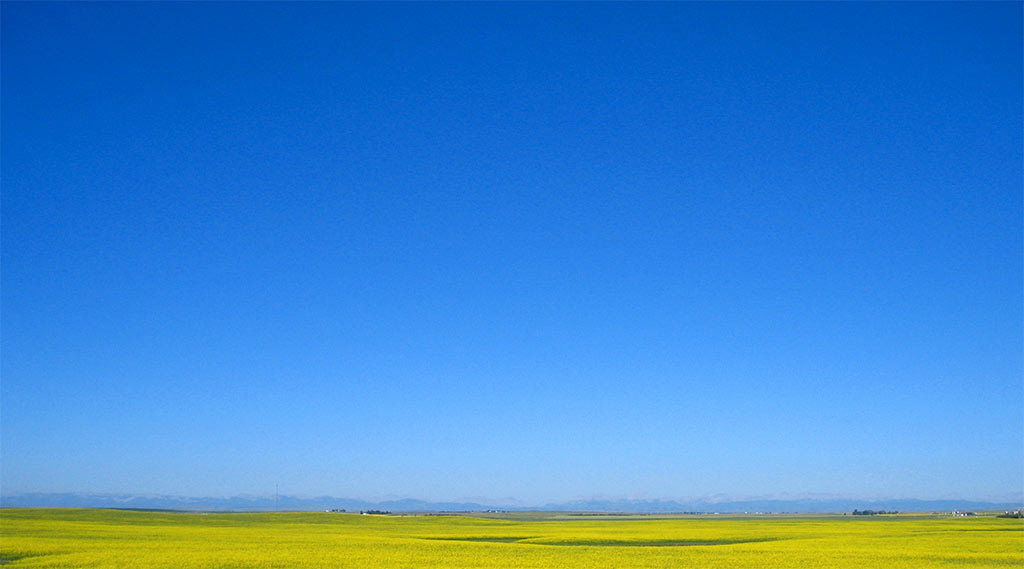
The southern Alberta sky — the kind some people are desperate to fight for. (Photo: Flickr)
Thanks to a certain U.S. president, the new year has seen a curiously Canadian topic readmitted to the news cycle: Alberta separatism. A topic that appears intermittently in the papers and the international conversation, but is seldom ascribed any discursive weight. For there is only one figure, of course, who is clownish and callow, yet commanding enough to carry it to the front of the collective mind, where it is approached at last with the anxiety it deserves. From your Editor-in-Chief and dually loyal Canadian-American, a word about our dissident Canucks. (Who knew that wasn’t an oxymoron.)
Alberta has always believed in the authority of geography: in a horizon that makes promises and then demands you work to keep them. The sky here is not decorative; it’s instructional. The blue teaches you early that abundance comes from effort and risk: drilling deeper than planned, planting before the frost is done with you, placing trust in a weather system with no reason to reciprocate. From within that logic, the meddling of political agents in Ottawa can feel less like governance than high-minded miscalculation.
So from it accrues the story these Albertans tell themselves: that they have done everything right. They built wealth from scratch. They paid their taxes. They powered the country. And yet, when the moral weather shifted, when carbon acquired a conscience, Alberta found itself cast as the problem child of the federation. Left to writhe in the humiliation of being told that the thing which made you indispensable has made you obsolete.
And so, separatism emerges. Not in the form of barricades or declarations, which belong to Canada’s louder North American twin, but as a recurring thought experiment: a politics in which justification may be deferred, money imagined as staying put, and rules envisioned by people not only conversant in frost lines and boom cycles but required to live by them.
The southern Alberta sky — the kind some people are desperate to fight for. (Photo: Flickr)
And so, the myth-making follows. Alberta as a nation-in-waiting: fiscally responsible, energetically sovereign, morally misunderstood. The rhetoric borrows from older Canadian anxieties (regional alienation, Western grievance) but sharpens them with a twenty-first century edge. Equalization not policy but parable. Environmental regulation, a test of loyalty. Federalism, a long marriage in which one partner suspects they’re being gaslit. And yet, for all its bravado, Alberta separatism is wonderfully self-aware. It knows, on some level, that it is less a blueprint than a provocation. The talk flares when oil prices fall or elections disappoint, then recedes when prosperity returns. Hence this histrionics conditional exit: We’re serious, unless things improve.
Alberta, as represented by its separatists, is indeed a child. Fed-up, starved for attention, wanting only to be seen. To be recognized not as a caricature (redneck petrostate, climate villain) but as a complex place with a long memory and a short fuse. Speaking separatistically to say: You are not listening to me.
Canadian treasure Margaret Atwood might remind us that nations, like people, are stories we agree to keep telling. Alberta’s separatist story is compelling because it projects to the world these provinces as both hero and exile, pioneer and martyr. (When else are non-citizens narrativizing those places.) But it is also incomplete. It understates how deeply-entangled Alberta already is: in supply chains, in immigration, in shared mythologies of Canadian decency and quiet compromise. Leaving wouldn’t provide escape so much as revision, which is never as clean as one hopes.
Alberta separatism, then, is about authorial consent. About who decides, who pays, who apologizes, who gets to feel proud without irony. It surfaces when the consent feels thin. It fades when the balance of recognition and resentment tilts back toward tolerable.
This is no coming rupture. More a recurring line in the national margin, underlined sometimes in anger, sometimes for emphasis. A reminder that federation is not a finished work, but a draft continually revised by regions that would like, just once, to hold the pen. In this century, newly fluent in fight and frontier, even Canada finds itself rehearsing old myths of manifest destiny, asking us all, once again, to believe it when it says it stands on guard.
Maybe we should listen.