
The Return of Tomodachi Life
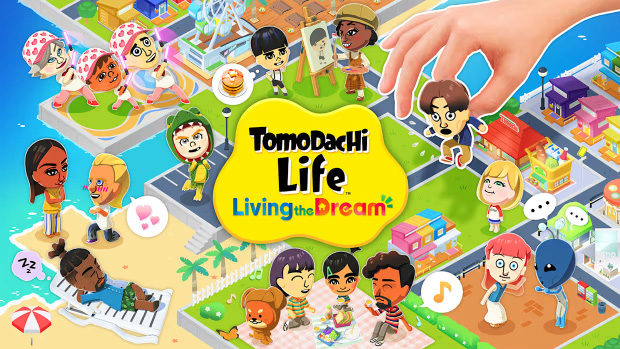
Tomodachi Life: Living the Dream is the third entry in the franchise, following Tomodachi Collection (2009) and Tomodachi Life (2013). (Image: Nintendo)
Tomodachi Life was released in Japan in 2013. A year later, it hit Western markets a month after being promoted by the Tomodachi Life Direct. In this Direct, Nintendo legends Reggie Fils-Aimé, Bill Trinen, and Satoru Iwata appeared as Miis to explain gameplay and Mii customization. Additional promotion included television ads showing children putting family members in the game and enjoying the wacky disconnect between in-game representations and real life. Celebrities also joined in, with custom Miis of Christina Aguilera and Shaquille O’Neal available through the American Tomodachi Life website.
Now, 12 years later, we finally see the return of Tomodachi Life. In a way, it’s almost a miracle.
Miis were always most strongly associated with the Nintendo Wii, Nintendo’s fifth home console, which was produced from 2006 to 2013. The Wii was already special for its innovation of motion controls and unique marketing. At a time when video games were the center of a moral panic surrounding violence and occult imagery, the Wii stood out because of its focus on family-friendly fun with a “healthy” fitness aspect. Miis were a part of this marketing tactic, and soon they were everywhere—even in non-Nintendo franchises. 81 games on the Wii incorporated Miis, mainly as save icons, but several let one play as their Mii. The most famous of these was, of course, Wii Sports Resort (Miis were featured also in Wii Sports, although the game was admittedly less popular).
Because of this deep tie between Wii Sports Resort and Miis, it was a shock when Nintendo released Nintendo Switch Sports. It was expected to be the successor to Wii Sports. To many people’s horror it came with “Sportsmates” on the box. Sure one could import Miis into the game, but both the marketing and the option to import them seemed to be buried. The option to make Miis was also on the Nintendo Switch, but only if you were seeking it—unlike the Wii where you were encouraged.
In general, it felt indicative of a shift in Nintendo’s perception with the new console. While the previous home console differentiated itself through a fitness focused perspective and featured entertaining Nintendo property games as a bonus, the new Switch was more interested in becoming an actual gaming console. There was a strong sentiment that Nintendo was becoming more serious and losing its general goofiness. The last Mii-centric game had been Miitopia in 2017, and while it was remastered for the Switch in 2021, it was more to market to those who had already played the game. Miis seemed on their way out.
However, Miis are back with Tomodachi Life: Living the Dream; the affiliated Direct gives some hope for this new entry in the franchise. In this article, I cover all the new and interesting mechanics introduced.
Mii Creation
Along with the traditional method of creating Miis through selection of facial features and their coordinates, Nintendo has added a “Get help” option. Here, instead of having to choose the appearance, the player answers questions about a person’s appearance. While the actual process was not shown, I imagine it could generate a face and then give “similar” faces to select from. They could continue to generate “similar” faces until the player is happy, a feature that existed in the old Mii makers on the Wii.
We’ve also seen an improvement in Mii customization from the previous Tomodachi Life, though there aren’t as many options as the Mii maker in Miitopia. One can control face shape, skin color, hair style and color, eyebrows, eye shape, nose shape, mouth shape, ears, glasses, makeup, and it seems like there’s an option for face paint. There are also sliders for height and body type, but I see those being somewhat limiting. The biggest innovation I saw was the potential for multi-colored hair and hair style combinations. However, I do wonder if they will bring back the option to scan in other people’s Miis like in Miitopia. It’s inevitable that someone will try to put Sans or Obama on their island.
Perhaps the best new addition was the addition of a non-binary option to the gender select screen. In past games, Miis were limited to just male or female and could only fall in love with the opposite gender, but now you can select “dating preferences” and have your Mii be interested in multiple genders or even none. The best returning feature is also in Mii creation with the Tomodachi Life personality test. With only five scales to rank your Mii on, the personality test often returns a surprisingly accurate personality type from its 16 options.
Another small detail I noticed is that the first Mii you create is no longer intended to be your stand-in. Previously, the player would be addressed as the first Mii’s “look-alike.” However, it’s shown in the Direct that you are no longer someone’s “look-alike” but instead the island’s “Leader.” This reflects a change in what Tomodachi Life is supposed to represent. Previously, it was meant to be populated with real acquaintances, so you could laugh at how they performed in-game compared to real life. However, many ignored that aspect to create fictional characters or import fictional characters from popular media. It seems that Nintendo is adapting to cater more to that style of play than the original intention, which I think is a good move. It makes sense to prioritize catering to those who played the game over newcomers, as the premise itself of Tomodachi Life is one of the weirder concepts out there. One could compare it to The Sims, but it has more of a focus on interpersonal relationships than on simulating daily life. Overall, the new Mii creation reflects how time has passed: customization is better, graphics have improved, and there’s more acceptance of alternate genders and sexualities. In a time where so many denounce these things, it’s so nice to see a major company like Nintendo embrace them.
Mii Interactions
To begin with, Mii interactions start out very simple, at the bottom of Maslow’s hierarchy of needs. The first complaint that you resolve is always that a Mii is hungry. Each Mii will have a favorite and least favorite food that you have to find, so experimentation with food is encouraged. How much a Mii is fed depends on how much they like the food. The player can also customize their outfits and room by purchasing pre-made options from the associated stores as commonly requested. Players have even more influence by giving phrases or poses for the Miis to adopt, making each character even more unique.
We also see an increase in more physical interactions with Miis. Tomodachi Life on the 3DS essentially limited interactions with a Mii to their apartment space, where one would talk to their Mii and maybe poke or prod. Outside of that, you couldn’t really interact with them unless they had a request. Now, they’ve introduced a drag-and-drop mechanic where you can force Miis together to interact or even comfort each other around the island. Depending on the situations you force them into, their relationships and feelings can change. Then based on interpersonal relationships, Miis will naturally interact on their own.
Buildings
There are some classic returning buildings and some exciting new ones. From the old games, we have the food market (Fresh Kingdom), clothes store (Where & Wear), news of (News Station), photo studio (Foto-tomo), and rooms store (T&C Reno). Markets also make a return, but instead of being a limited time event they’ve been given a permanent location at the Marketplace where you can gamble on mystery bags. The new buildings include an island decoration shop (Quik-Build) and some other buildings seen around the island that were not showcased.
Perhaps the most exciting new building though is the Palette House. Here you can draw custom pets, TV shows, or clothes. You can also change the exterior design of houses and introduce themes to your island. I hope to see some inspiration from Animal Crossing: New Horizons here as well where players could use a similar feature to make custom designs and share them freely with codes. Otherwise, I could see this going underutilized by those who don’t have the time to design things on their own.
Island Customization
Previously, Miis all lived in one big apartment building, with each Mii getting a singular room. In Living the Dream, it seems like they’re taking a more Animal Crossing approach, with each Mii getting their own small house by default. However, they can also move into a large building together that the player can control the layout of to include common areas and activities for the Miis to gather around. Still, regardless of residence, each Mii seems to only get one room. However, their buildings can be moved around.
The 3DS release of Tomodachi Life had a set layout for the island. No matter what, each building had a set location that could not be changed. However, it seems that Nintendo took note of how much players enjoyed the decorating aspect of Animal Crossing: New Horizons and decided to give a lot more creative control to players in decorating the island. Additionally, unlike Animal Crossing, you can actually change the shape of your island. It’s a little off-putting how there are no round edges and the island must be laid out on a grid system, but I can understand that it might be necessary for gameplay reasons. This is because you can actually build custom areas to facilitate interactions between Miis.
One example they showed in the Direct is the construction of a hangout area with a vending machine and picnic table. Instead of being a prepackaged “hangout” area, the individual components are placed separately but maintain synergy between each other. More examples shown briefly include water fountains, a water sprinkler, and flowers. Miis can even request island decorations to be added, indicating that there is some awareness of Miis of the island outside of their own rooms.
A Moment of Silence
Of course with the new game we’ve seemed to have lost some of the old mechanics. A moment of silence for the rankings board, compatibility tester, and job diagnosis buildings. They might come back, but it’s not for certain. One of the biggest omissions from the Direct is the Concert Hall, which would’ve allowed Miis to sing songs with lyrics written by the players. This is also probably one of the most well-known eccentricities of Tomodachi Life, as Miis would cheerfully sing lyrics regardless of content. One could theorize that the lack of control over lyric content posed a problem to Nintendo’s image and so they had to get rid of the building. A similar concern could’ve been raised surrounding the Question Hall/Judgement Bay where Miis would randomly vote between two options created by the player. As it stands neither of these iconic features will be brought back.
Release Date
The new Tomodachi Life will be released for both the Switch and Switch 2 on April 16, 2026 for $60.