
TV Review: The War Between The Land and The Sea
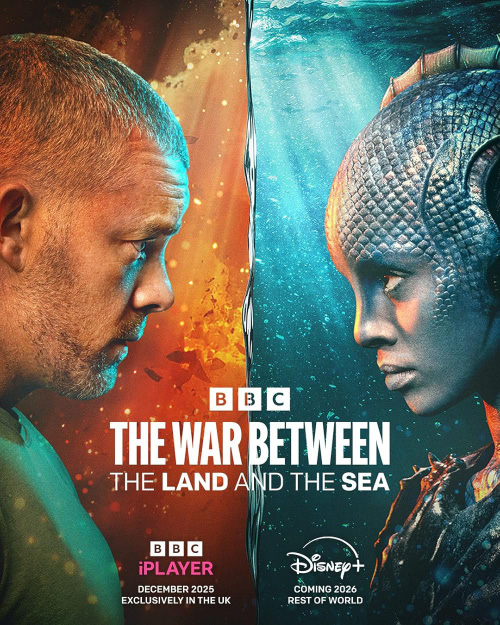
The War Between The Land and The Sea is available for streaming on BBC iPlayer and Disney+, and for purchase on Apple TV in the UK. (Image: IMDb)
What would happen if all the trash humans have dumped into the ocean rained back onto land? The War Between the Land and the Sea considers what would happen if an underwater species suddenly revealed itself, fed up with the damage humans have inflicted on them through pollution and other actions at sea.
The show is a spinoff in the Doctor Who universe, but viewers don’t need to know much to follow along beyond a few minor references to “The Doctor” interspersed throughout the show. The first couple of episodes set the stage for thoughtful reflections on how humans have impacted the environment, how we would act if we were forced to confront that, and the political and economic factors at play. While the show later veers into something more akin to a forbidden love story, there are still moments to reflect on.
Barclay Pierre-Dupont, a civilian employee of the Unified Intelligence Taskforce (UNIT), unexpectedly becomes humanity’s ambassador to Homo Aqua, a technologically advanced underwater species. Their representative, Salt, demands an immediate end to ocean pollution. When humans counter with a gradual reduction over 40 years, Salt dismisses it as nowhere near fast enough and the talks quickly sour.
Homo Aqua escalate toward coercive tactics, and the ensuing negotiations put several real-world issues on the table: the environmental damages caused by globalization, the endangerment of marine species, water contamination, and the amount of trash in the ocean.
While UNIT and Pierre-Dupont try to reach a peaceful resolution with Homo Aqua, self-interested businessmen and military officials conspire behind the scenes to resolve the conflict with an iron fist, pressuring the British prime minister to achieve their goals. The critique is familiar: politicians who answer to donors, shareholders with vested interests in exploiting the environment—this sci-fi show is not so “fi.”
After all is said and done, Homo Aqua are offered a trench in the Pacific Ocean, the deepest place on Earth. Pierre-Dupont calls it a “haven,” free from pollution, sound, and viruses. One could also call it a reservation of sorts. As Salt puts it: “We will accept this offer if you give this land its true name: a hunting ground. We will live there in full knowledge of what you will do to us. We will do whatever you want, because we are terrified of you.”
At the beginning of the show, Salt rejects the government’s appointed ambassador and specifically requests Pierre-Dupont because of his “humanity and compassion,” demonstrated by the respect he showed to a deceased Homo Aqua. This choice can also be interpreted as a reminder that “nobodies” and regular people, as Pierre-Dupont describes himself, should have a voice in the decisions that shape the future of humanity and this planet.
At the end of the show, self-serving human leaders and officials have it their way—a cynical yet fitting ending that seems to be a warning, rather than a victory.