
Stop Trying to Convert Climate Deniers: A Psychologist’s Guide to Actually Making a Difference
Or: How I Learned to Stop Worrying and Talk to People Who Already Care
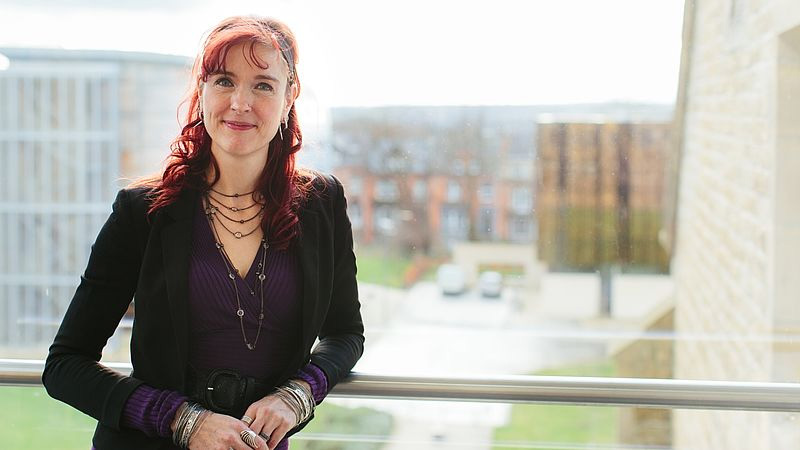
Wändi Bruine de Bruin has published over 130 peer-reviewed papers on how people make decisions about wellness. (Photo: University of Leeds)
When you see an event titled “Communicating The Climate Crisis,” you might expect another earnest lecture about melting ice caps accompanied by guilt-inducing polar bear photos. But Wändi Bruine de Bruin — Provost Professor of Public Policy, Psychology and Behavioral Science at USC — had a different message for the Student Activism Speaker Series crowd: You’re doing it wrong.
Not in a mean way. More in a “let me save you decades of banging your head against a wall” kind of way.
And information problems are much easier to solve than motivation problems.
The “Nobody Else Is Doing Anything” Problem
Here’s a psychological trap: You care about climate change. You want to act. But then you look around and think, “What’s the point? Nobody else is doing anything. I’ll just suffer alone while the world burns anyway.”
Bruine de Bruin presented research showing that even motivated people won’t act if they believe they’re alone in their efforts. It’s not selfishness—it’s rational psychology. Why make personal sacrifices if you’re just one person tilting at windmills?
The solution? Stop telling people nobody is doing anything.
This seems obvious once you hear it, but it’s counterintuitive to activists. The natural instinct is to say, “The situation is terrible! Not enough is being done! You need to act!” But what people hear is: “Nobody else is bothering, so why should you?”
Instead, try: “More and more people are taking action. Join us.”
In one study on voter turnout, researchers tested two messages. Message one: “Voter turnout has been declining for decades, please vote.” Message two: “More and more citizens are voting, the vast majority voted in recent elections.”
Result? The positive social norm message increased voting intentions by 7 percentage points. Same facts, different framing, better results.
The Inconvenient Truth About Convenient Truths
Here’s the thing that keeps climate activists up at night: somewhere between 10-15% of Americans still don’t believe climate change is real. Despite the wildfires. Despite the “100-year floods” happening every other Tuesday. Despite everything.
And what do we do? We craft elaborate arguments. We share more data. We get increasingly frustrated when Uncle Bob at Thanksgiving still won’t admit that maybe, just maybe, the scientists have a point.
Bruine de Bruin’s radical proposal? Stop. Just… stop.
“Why are we focusing so much energy on the 10-15% of hardcore deniers,” she asked, “when 65-75% of people are already concerned about climate change but don’t know what to do?”
It’s a bit like spending all your time trying to convince people that restaurants exist while ignoring the hungry crowd already standing outside asking for the menu.
The Great Packaging Panic (And Why You’re Worried About the Wrong Thing)
Pop quiz: What’s the best thing you can do to reduce the carbon footprint of your food choices?
If you answered “reduce packaging waste,” congratulations — you’re exactly like most environmentally-conscious consumers. You’re also wrong.
During the pandemic, Bruine de Bruin noted, people were genuinely distressed about takeout containers. All that plastic! All that waste! And yes, it’s not great. But here’s the uncomfortable truth: the biggest thing you can do is eat less meat.
Especially red meat. The carbon footprint difference is staggering. Going fully vegan is optimal (Bruine de Bruin is vegan herself, though she admits “it’s not for everyone”), but even cutting back a little makes a massive difference.
The problem? Most people who care about climate change don’t actually know this. They’re obsessing over cardboard boxes while the beef industry laughs all the way to the melting permafrost.
This is an information problem, not a motivation problem.
(Image: Understanding America Survey/USC)
Critical Mass: Or, How Biking Became a Street Party
Speaking of positive framing, Bruine de Bruin shared her favorite example: Critical Mass, a monthly bike ride in LA that started as a protest 30 years ago and evolved into a rolling street party with 1,000-3,000 participants.
She showed a photo of herself at Critical Mass — flowers decorating her bike (a Dutch tradition to prevent theft, naturally), surrounded by thousands of cyclists having an absolute blast.
Her point? “Don’t you want to bike? Look how much fun that is!”
Not: “You should bike because cars are destroying the planet, and you’re a terrible person if you don’t.”
But: “Look at all these people having fun together. Join us.”
The “Climate Crisis” Crisis
Here’s where things get spicy: Bruine de Bruin’s research found that calling it a “climate crisis” or “climate emergency” doesn’t actually help.
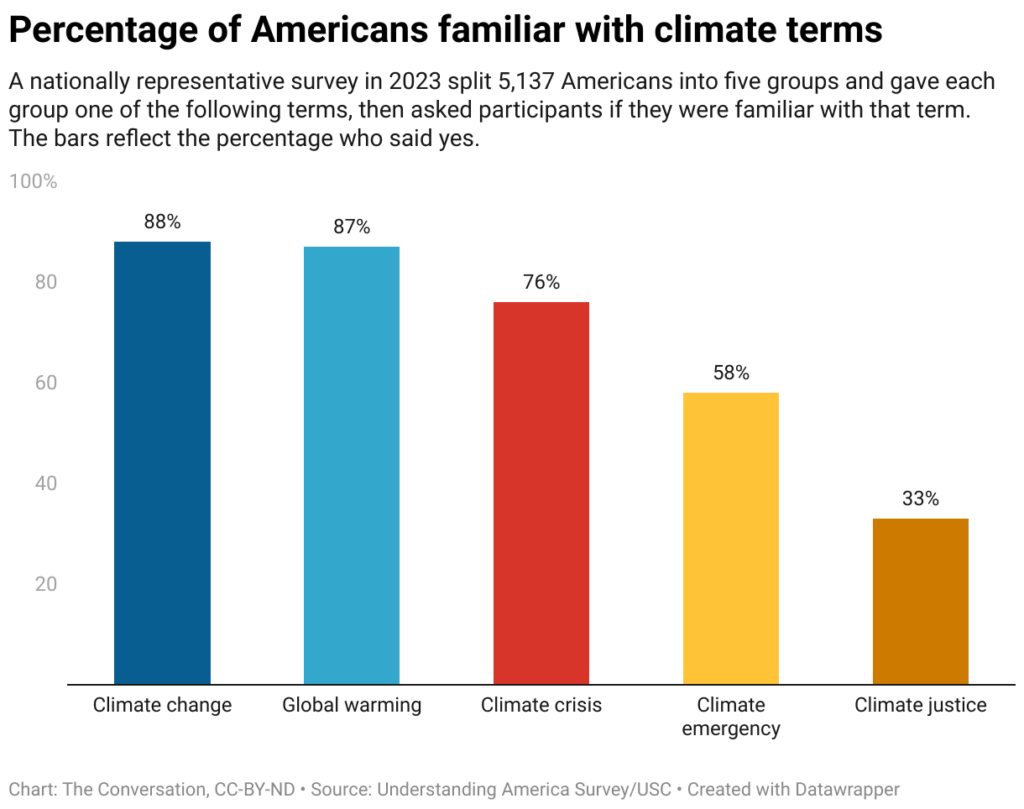
In a national survey of over 5,000 Americans, people were most familiar with “climate change” and “global warming.” “Climate crisis” and “climate emergency” were less familiar, and “climate justice” — despite being incredibly important for equity reasons — was the least familiar term of all.
And if people aren’t familiar with a term, they can’t be concerned about it.
Some people also felt that “crisis” language was manipulative — like activists were trying too hard to scare them. Which, fair. When you’ve lost your job and can’t pay rent, being told that climate change is the crisis can feel tone-deaf.
The irony? The title of Bruine de Bruin’s own talk included “Climate Crisis” because she correctly guessed her audience would be familiar with the term. Meta-humor at its finest.
The Jargon Problem: When Scientists Speak, Nobody Understands
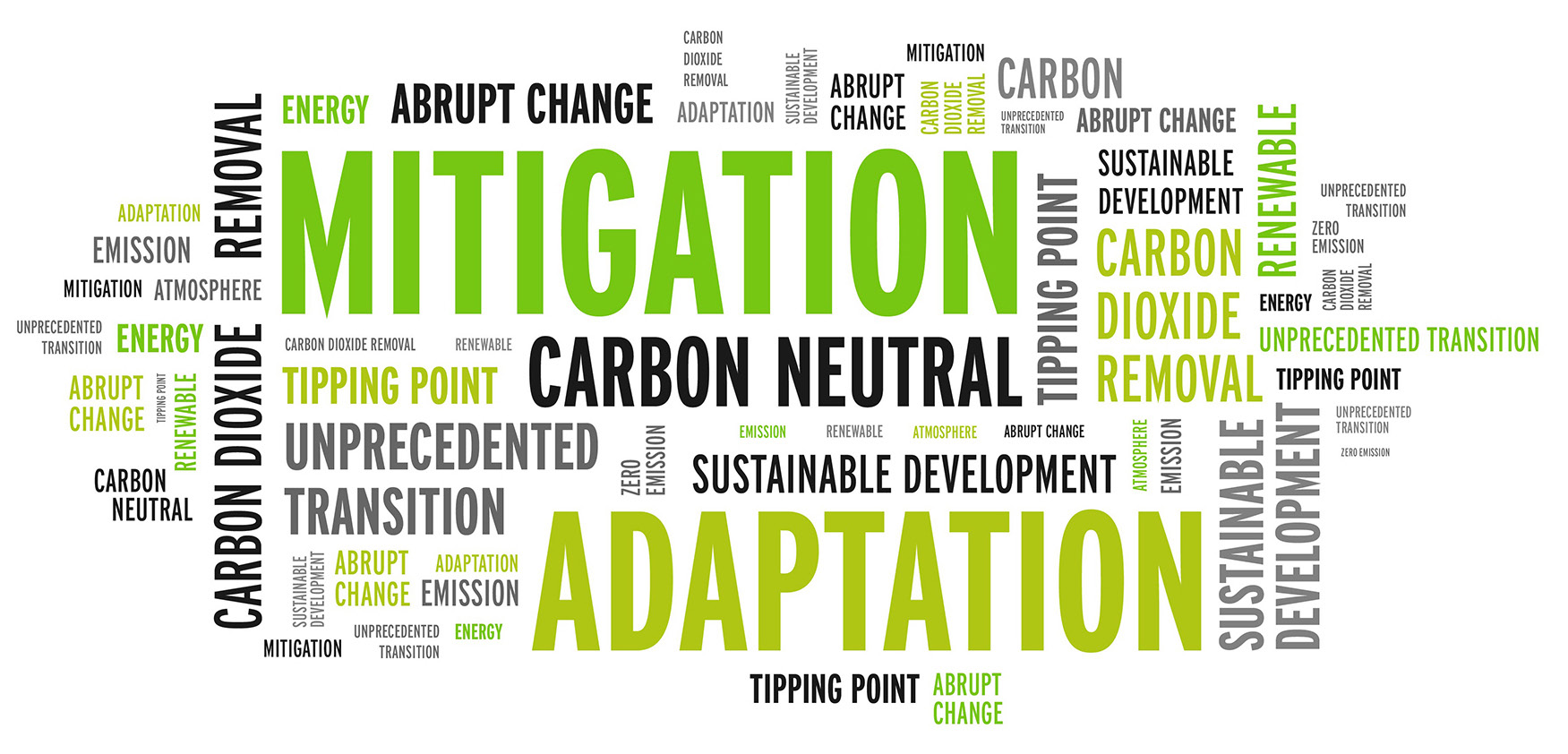
Quick: Define “mitigation” and “adaptation” in the context of climate change.
If you said “mitigation is reducing conflicts” or “adaptation is turning a book into a movie,” you’re not alone. Those were actual responses from Bruine de Bruin’s research — from people who knew they were in a climate change interview.
Climate scientists love their jargon. “Mitigation” (actions to stop climate change from getting worse) and “adaptation” (actions to protect against climate change that’s already happening) are core concepts. But they’re also three-syllable words that mean completely different things in everyday English.
The solution? Use everyday language:
• Instead of “mitigation”: “actions we can take to stop climate change”
• Instead of “adaptation”: “actions we can take to protect against the climate change we are already seeing”
Is it longer? Yes. Is it clearer? Absolutely.
Bruine de Bruin shared that even her German colleagues found the same problem — and in German, where words naturally combine into impossibly long compounds, people still said: “By the time I reach the end of this sentence, I have forgotten how it started.”
If you’re making Germans complain about sentence length, you’ve gone too far.
(Image: Understanding America Survey/USC)
The Fifth Tip: Actually Listen to People
Bruine de Bruin’s final recommendation was deceptively simple: Address the concerns of your audience.
Take people seriously. Find out what they actually care about. Find common ground.
Example: At USC, she discovered that many students don’t walk around LA because they think it’s unsafe, ugly, and “nobody walks in LA” (yes, the Missing Persons song is accurate). So what did USC do? Started a walking group where people could walk together to safe, pretty places — addressing the real barriers while normalizing walking as a behavior.
Is this guaranteed to work on hardcore deniers? No. Will it work on the motivated majority who want to do something but need information, social support, and practical solutions? Absolutely.
The Takeaway (With a Side of Realism)
Bruine de Bruin isn’t promising that better communication will solve climate change. Someone in the audience asked the hard question: “Isn’t it true that even if we all went vegan, we still need massive policy changes and corporate accountability? Aren’t individual actions kind of… insufficient?”
She didn’t dodge it. Yes, individual action alone won’t solve systemic problems. Yes, a tiny percentage of companies produce the vast majority of emissions. Yes, this is bigger than personal choice.
But here’s the thing: getting that motivated majority to act collectively— to vote, to advocate, to demand policy changes — requires the same communication principles. You need people to believe that collective action is possible, that others are joining the movement, and that there are concrete steps they can take.
You can’t build a movement by telling everyone that nothing matters and we’re all doomed anyway.
So stop arguing with climate deniers at Thanksgiving. Instead, talk to your cousin who cares but doesn’t know that her Meatless Monday habit actually makes a real difference. Tell your friend about that awesome bike ride next Friday. Share information using words that actual humans use.
And for the love of melting glaciers, stop sending people IPCC reports as casual reading material.
Wändi Bruine de Bruin’s five tips for climate communication:
- Address the motivated majority, not the hardcore deniers
- Emphasize social norms positively (others are acting, join us)
- Use everyday language, not scientific jargon
- Stick with “climate change” and “global warming”—don’t overthink terminology
- Listen to your audience’s actual concerns and address them
And if you take only one thing away: Know your audience. Everything else follows from that.