
Tusks and Wonder: A Review of Blood Ivory
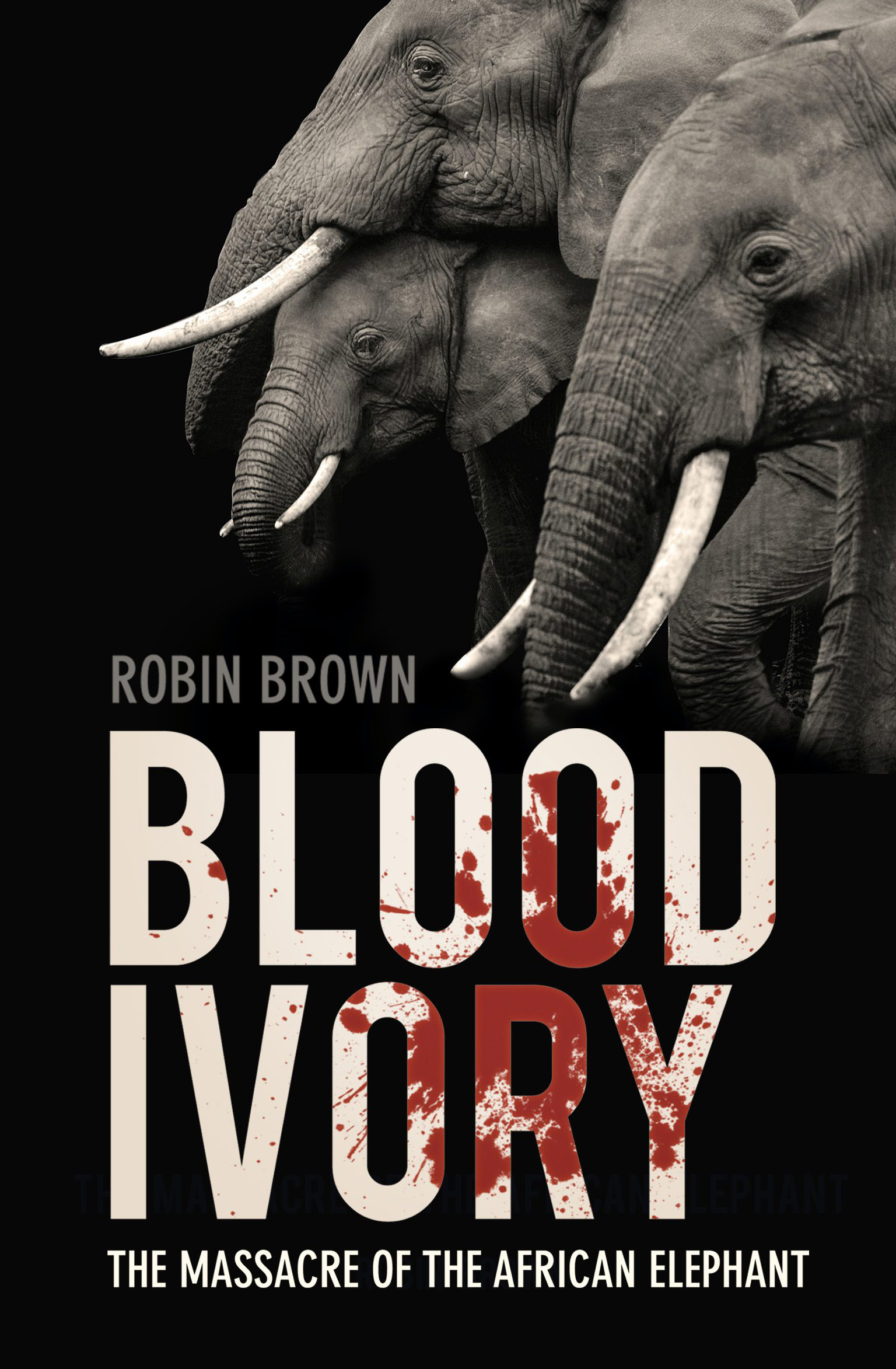
Cover art for Blood Ivory: The Massacre of the African Elephant by Robin Brown (with John Hanks). (Photo: The History Press)
In my three years at Caltech, I have learned one undeniable truth: winter terms are the hardest. If you aren’t grinding through core requirements, you’re battling the occasional rains and winds. If not the weather, then some burning bush (literal and metaphorical). The moral is simple — in winter, things just happen. So when spring break finally arrives, the excitement of Techers is palpable. We hope to escape to anywhere, to anywhere but here.
I had plans. A destination was set. But after an intense battle with bureaucrats halfway across the world, I had to settle for staying on campus. Staying on campus, as it turned out, was unexpectedly peaceful. No cramped laundry rooms, no queue for gym machines and — to my great joy — no class deadlines. But the biggest pro was this: I finally had the focus and time to read the books that the grind never allows.
This spring break, I got my hands on Blood Ivory: The Massacre of the African Elephant by Robin Brown. It is a tale of the massacre of the African elephant. Coming from Kenya, I am no stranger to the subject. Wildlife biology was a huge component of my high school and poaching was never far from the headlines. Blood Ivory does not dwell on the science of poaching. Instead, it dives into the historical and social forces behind the decline of elephants across Sub-Saharan Africa.
Let me briefly touch on the science, because it matters. Poaching caused the decline of so-called “supertusker” elephants by reversing natural selection. Large tusks, once an advantage for survival and mating, became a death sentence. Poachers selectively targeted elephants with the biggest ivory, favoring a pre-existing genetic mutation linked to the X chromosome that causes tusklessness in females (but is lethal to males). The result was a dramatic rise in tuskless females in heavily poached populations. This is rapid, human-driven evolution — the genes for “super tusks” systematically removed. But the cost is real: tuskless elephants struggle to dig for water and strip bark, harming their own survival in other ways.
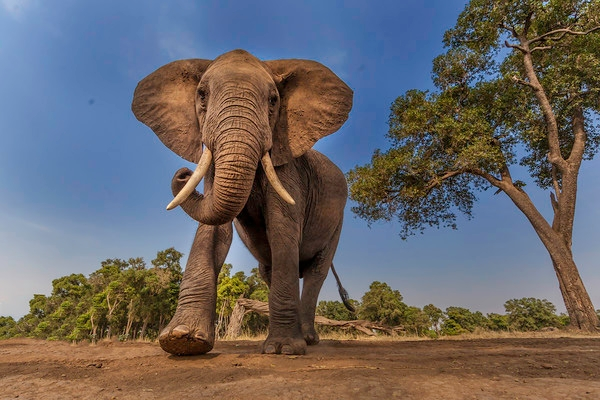
The glorious African savannah elephant, or Loxodonta africana. (Photo: Manoj Shah/Getty)
Robin Brown, however, largely ignores the science. He delves instead into the social anatomy of ivory hunting. His book unfolds chronologically, tracing two major arcs: the historical and the modern.
In the historical arc, Brown focuses on the infamous Arab slave and ivory trader Tippu Tip (Hamed bin Mohammed al-Murjebi), alongside European explorers like Stanley and Livingstone. These men both documented and inadvertently enabled the decimation of Central and East Africa’s elephant populations. The thread depicts the staggering scale of 19th-century ivory exploitation — elephants slaughtered by the thousands to fuel global demand for piano keys, billiard balls, and luxury goods.
The modern arc shifts to the 1970s and 1980s, portraying the industrial-scale poaching crisis that brought the African elephant to the brink of extinction. Here, Brown dramatizes the transition from muzzle-loading rifles to helicopter-mounted machine guns, highlighting the roles of organized crime, corrupt government officials, and the insatiable Asian markets for raw ivory.
Now, the most compelling parts of Blood Ivory were those that raised conflicts within me — personal, moral, and historical.
The first big question concerned the correlation between slavery and ivory hunting. Brown notes that many hunters were driven not only by profit but also by the sheer amount of meat that African tribes consumed due to their inherent carnivorous traditions. On this account, most original African tribes are guilty. I eat a lot of meat — enough that my friends frequently comment, “You should include more veggies in your diet.” Jokes aside, this part of the book made me ask myself: if African tribes had eaten less meat, would less ivory have been hunted? It is an uncomfortable question, and Brown does not pretend the answer is simple. My reasoning is that ivory was the real economic driver due to external demand. It is not local consumption, therefore, that drove the poaching business. If it were the case, then there would be no accounts of rotting carcasses from poaching activities. Anyway, it was a question worth thinking about.
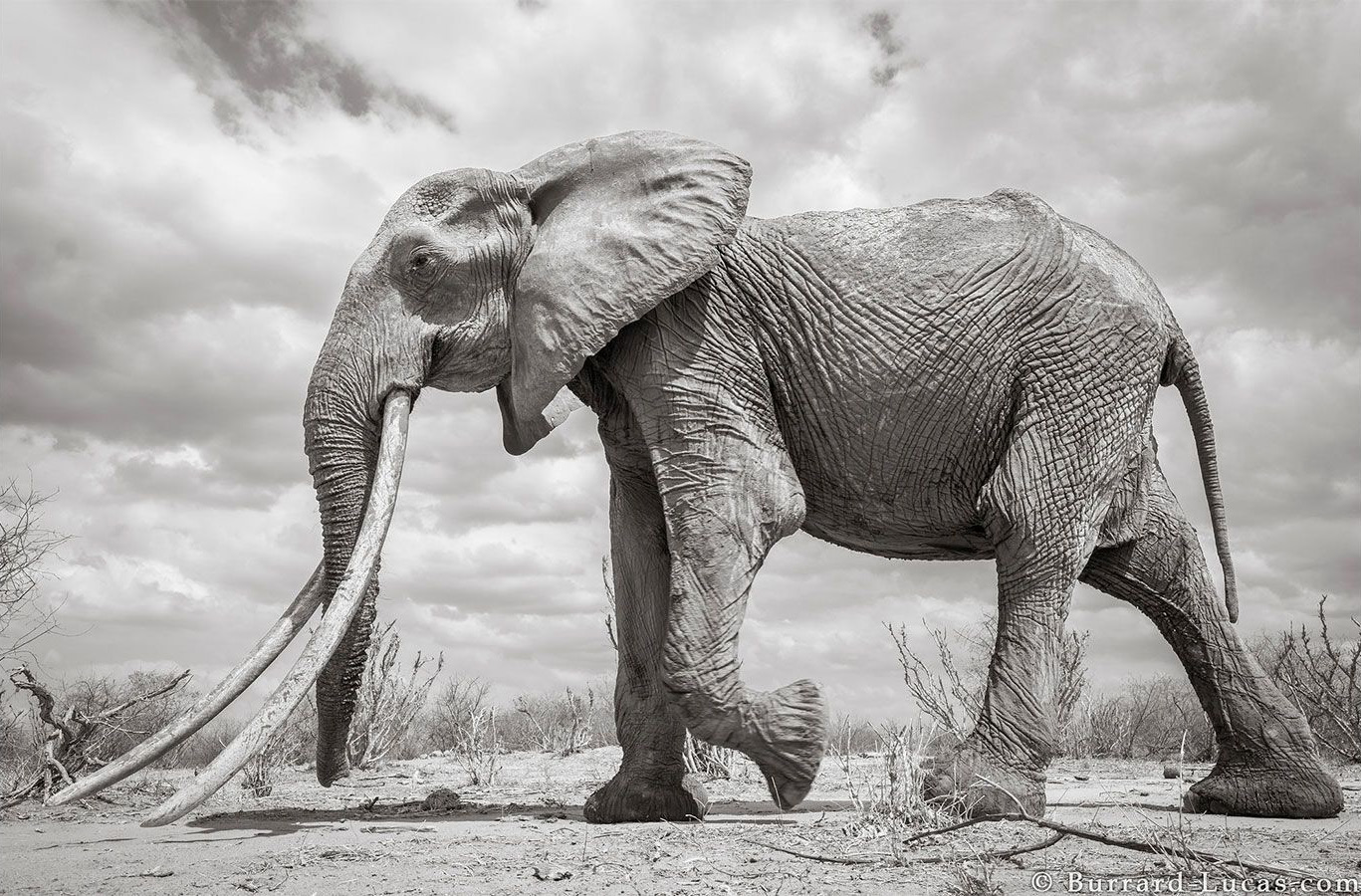
An “Elephant Queen” in Kenya, known as a “big tusker.” (Photo: Will Burrard-Lucas/CNN)
The second big moment came from Brown’s use of imagery and philosophy. Drawing from Jose Ortega y Gasset’s Meditations on Hunting, he presents a striking idea: humanity is a runaway from the natural world. Having broken away from nature, humans set out to create history — an ongoing effort to turn the imagined, the unlikely, and even the impossible into reality. History is always built against the grain of nature’s flow. The discomfort and deep uneasiness that comes from living within history is so overwhelming that people seek temporary relief by artificially returning to nature. That return, Brown argues, was originally enabled through the act of hunting.
This passage resonated with me. With the rise of conservation, we have largely ceased hunting with machetes, guns, and traps. But have we stopped hunting? I think not. Now, we hunt with our eyes and cameras. We chase experiences — the perfect photograph of a super tusker like Craig beneath Kilimanjaro, the fleeting thrill of proximity to the wild. It is a gentler kind of extraction, perhaps, but extraction nonetheless. We still want something from nature. We just dress it up as wonder.
Blood Ivory is not an easy read. It is dense, morally uncomfortable, and unflinching in its depiction of violence. But it is also necessary. Robin Brown reminds us that the ivory trade was never just about greed. It was about history, empire, hunger, and the strange human need to escape history by reenacting our oldest relationship with the wild.
So yes, winter terms are hard. But spring breaks spent with books like Blood Ivory? They might just be harder — in the best possible way.
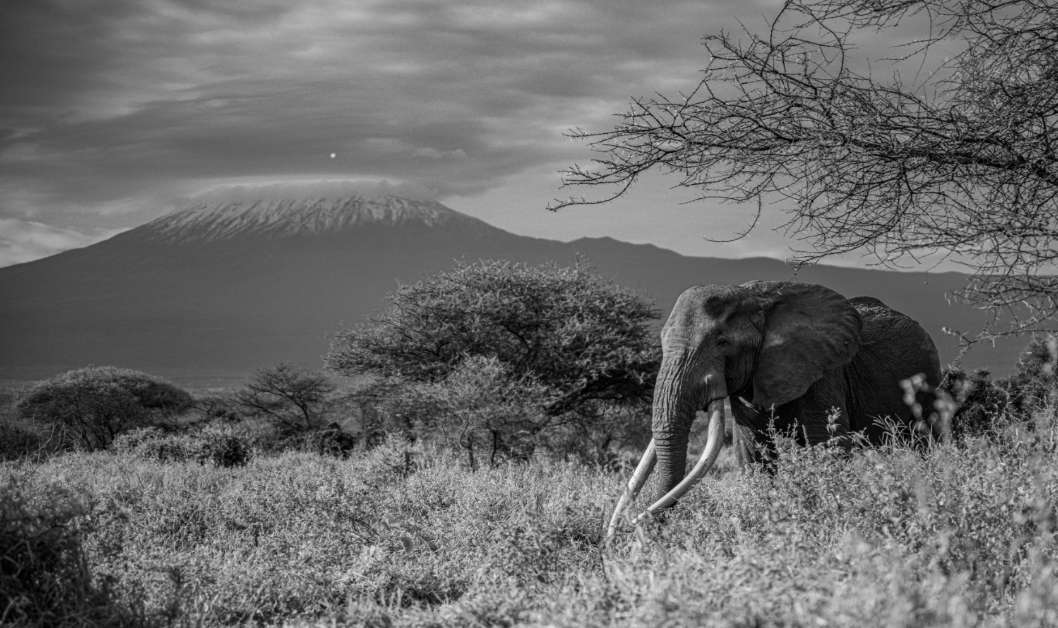
Craig, one of Kenya’s last remaining “super tuskers,” roams Amboseli National Park with the iconic Mount Kilimanjaro in the background. (Photo: Nitin Madhav)