
Caltech Alumnus Accused in Washington Correspondents’ Dinner Attack
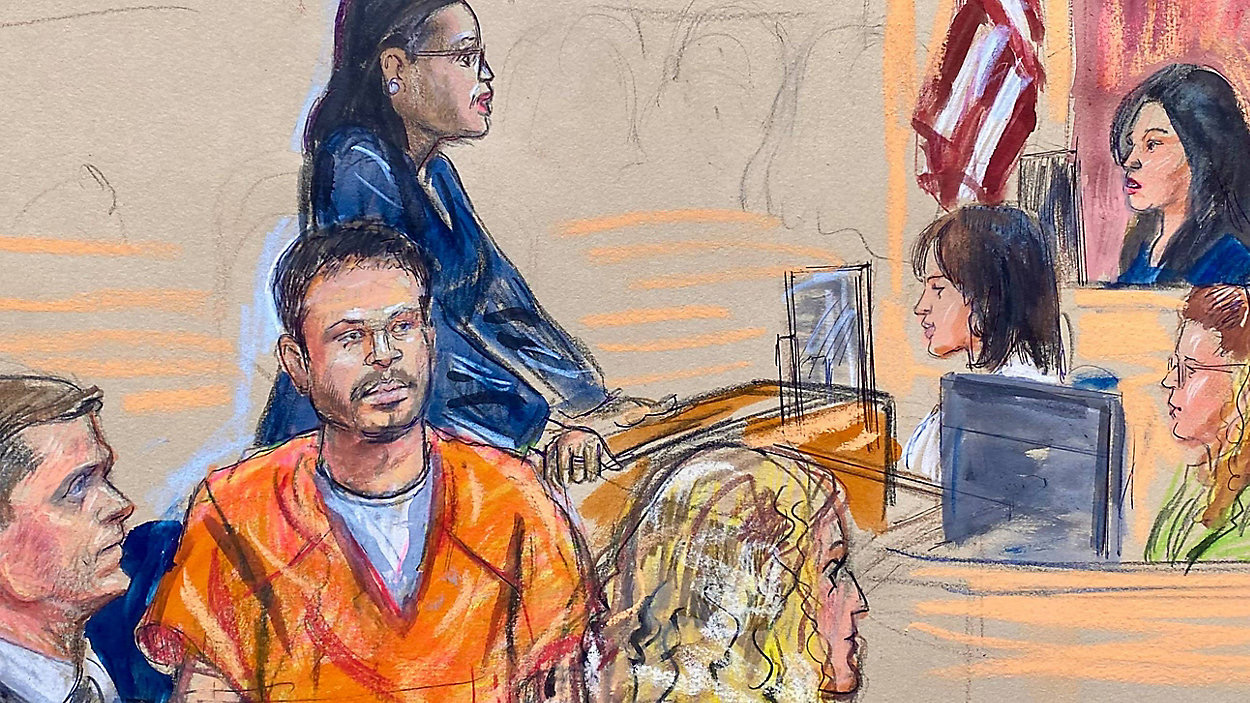
A courtroom sketch that renders Cole Thomas Allen, center, appearing before U.S. Magistrate Moxila Upadhyaya, in federal court, Thursday, April 30 in Washington. (Image: Dana Verkouteren/AP)
Federal authorities have identified Cole Thomas Allen, a 31-year-old Torrance man, as the suspect in the April 25 shooting incident at the Washington Correspondents’ Dinner, where President Trump and senior administration officials were in attendance. Allen has pleaded not guilty to charges including attempting to assassinate the president, after prosecutors alleged that he traveled from California to Washington, D.C., checked into the Washington Hilton, and tried to breach security near the ballroom while armed.
The incident has drawn particular attention on campus because of Allen’s apparent Caltech connection. In an April 26 message to the Caltech community, Chief Communications and External Relations Officer Shayna Chabner wrote that media reports had identified the suspect as Cole Thomas Allen and that Caltech could confirm “an undergraduate student by the name of Cole Allen graduated from Caltech in 2017.” The Institute stopped short of independently confirming that the alumnus and the suspect are the same person, deferring to federal authorities while “unequivocally” denouncing the violence.
A Los Angeles Times profile described Allen as a former mechanical engineering student who participated in Caltech Christian Fellowship, fencing, Nerf Club, and a robotics design competition before working as an engineer, game developer, and tutor. People who knew him described him as quiet, polite, and largely apolitical in person, even as social media accounts linked to him reportedly became increasingly consumed with criticism of Trump, U.S. foreign policy, and the wars in Ukraine and Iran.
A recent AP report adds that Allen agreed to remain jailed for now while awaiting trial. He did not enter a plea during a brief federal court appearance before U.S. Magistrate Moxila Upadhyaya. Prosecutors say Allen planned the attack for weeks, tracked Trump’s movements online, and was carrying an ammunition bag, shoulder holster, and sheathed knife shortly before the incident. The defense, however, argued in court filings that the government’s attempted-assassination case rests on “inferences” about Allen’s intent and “speculation,” noting that his writings did not mention Trump by name.
For Caltech, the story is therefore being handled at two distances at once: as a national act of political violence, and as a disturbing possible connection to the Institute’s own alumni community. The administration’s statement reflected that balance, acknowledging the reported tie without speculating beyond confirmed facts, while directing media inquiries to official channels and expressing support for those affected.