
Robert Indiana’s LOVE to Join The Huntington’s Collection
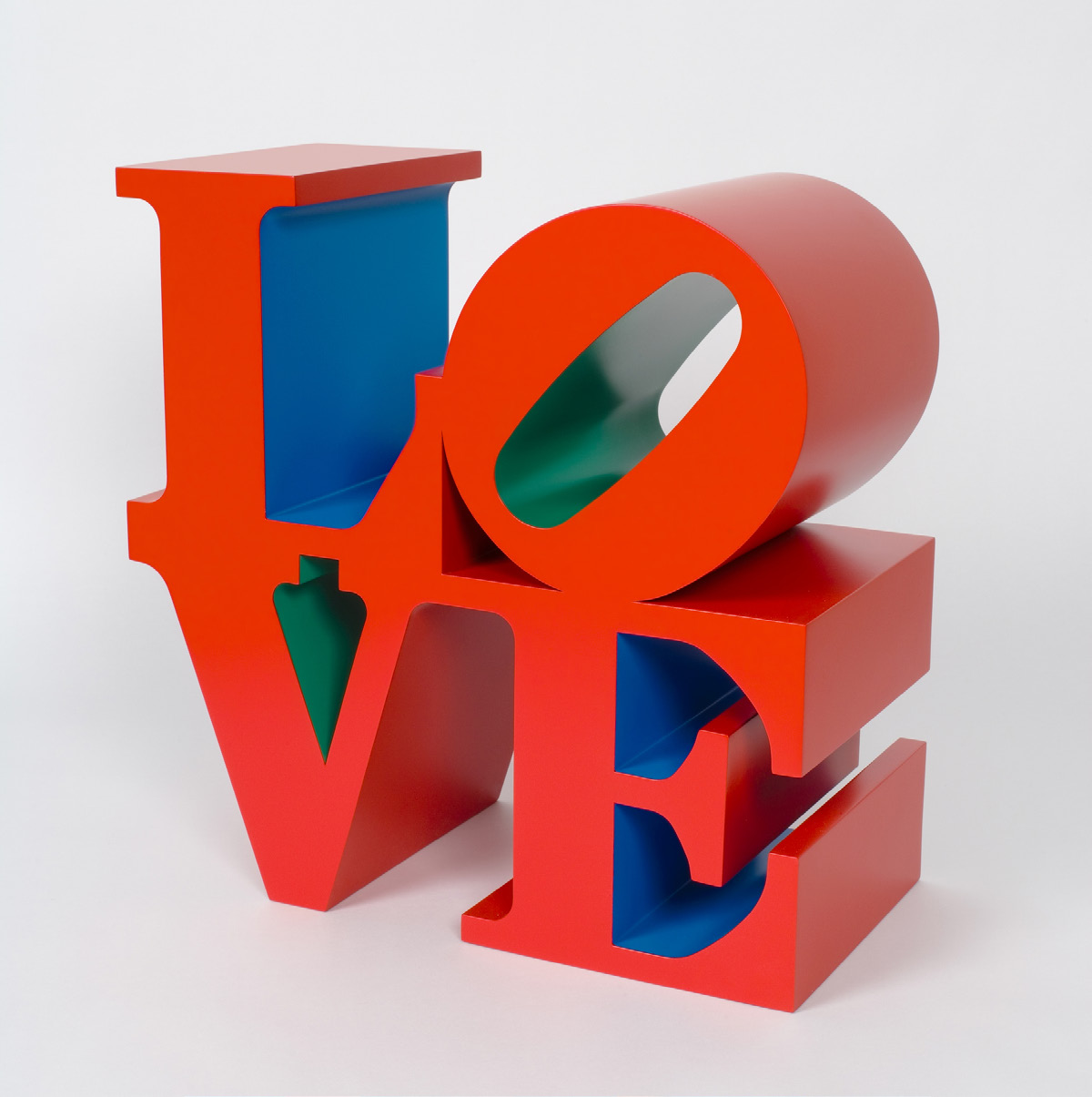
Robert Indiana, LOVE. (Source: Tom Powel Imaging/The Robert Indiana Legacy Initiative/Artists Rights Society, New York)
Robert Indiana’s LOVE, one of the most recognizable works of 20th-century American art, is set to be part of The Huntington’s permanent collection later this year. Originally created as a drawing in 1964, LOVE turned the everyday word into an iconic symbol. Today, there are more than 50 LOVE sculptures installed worldwide.
“We are deeply grateful to Terri and Jerry Kohl for their generosity in making this acquisition possible,” said Karen R. Lawrence, president of The Huntington. “Jerry believed LOVE belonged in a place where it would be seen and experienced by millions of visitors in the years leading up to the Los Angeles Olympics, during the games, and far beyond.”
When LOVE was selected for a Museum of Modern Art (MoMA) holiday card in 1965, it became one of the museum’s most popular designs and introduced the motif to a wide audience. Following the card’s success, Indiana adapted the design into sculpture, and the image was later reproduced on a U.S. postage stamp, helping to make it one of the defining images of postwar American art and a symbol of the “Love Generation” associated with 1960s counterculture.
Born Robert Clark in 1928, Indiana attended the art program at Arsenal Technical High School in Indianapolis, where he graduated as valedictorian. He then served for three years in the U.S. Air Force before studying at the Art Institute of Chicago under the G.I. Bill. Later, he attended the Skowhegan School of Painting and Sculpture in Maine and the Edinburgh College of Art.
Indiana became a major figure in postwar American art and was closely associated with the Pop Art movement of the 1960s, though he rejected the label, once saying, “I was the least Pop of all the Pop artists.” He has often been described as an unconventional Pop artist because his work incorporated autobiographical references and symbolic associations more directly than much of the movement’s commercial imagery.
Raised in the Christian Science church, where he recalled seeing the phrase “God is Love,” Indiana drew on early associations with words and colors, including the red Phillips 66 sign at the gas station where his father worked. His work explored language, American identity, and personal history, and is held in major collections including MoMA, the Whitney Museum of American Art, the National Gallery of Art, and Tate Modern.
Although LOVE brought him international recognition, its popularity also overshadowed much of his broader practice. Indiana eventually left New York City for Vinalhaven Island in Maine, where he lived for the rest of his life and died in 2018 at the age of 89.
Indiana produced more than 50 editions of the sculpture, including versions translated into Spanish and Hebrew. The format also took on a political role in 2008, when he used the same stacked-letter design for HOPE, created in support of Barack Obama’s presidential campaign. In a Christie’s lot essay for a painting of LOVE, the auction house described the work’s “endearing simplicity and omnipresence” as “a beaming source of light against dark, troubling times,” adding that “Love is a command, and we as the viewer are to obey in any capacity we can.”
“We encountered LOVE together in cities around the world, and it kept drawing us back,” said the Kohls. “When the opportunity came to place it permanently, The Huntington felt like the natural home — where millions of visitors will experience it for generations to come.”