
Spring Wildlife: Parenting
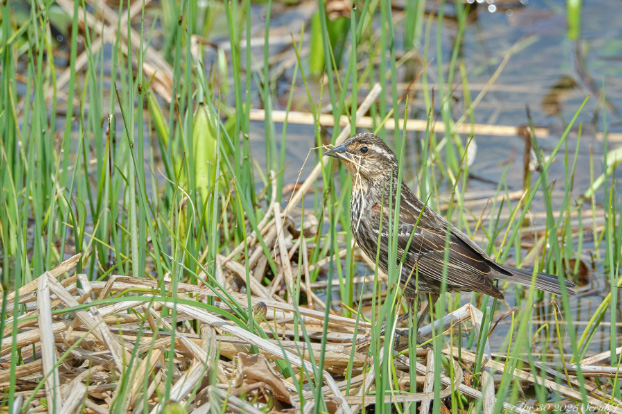
A female red-winged blackbird is collecting nesting materials.
As Mother’s Day has just passed and Father’s Day is coming up, this issue will talk about parenting in the nonhuman animal world. While all but one photo was taken off campus, a lot of the animals (mostly birds as I am a bird expert) mentioned in this article can be found in the adjacent Pasadena area, so keep your eyes out for spring activity!
One of the greatest missions in spring for many animals is to raise a generation of young and graduate them into independent life. This intense process spans from weeks to years depending on the species, and the demands on the parents are often extraordinary.
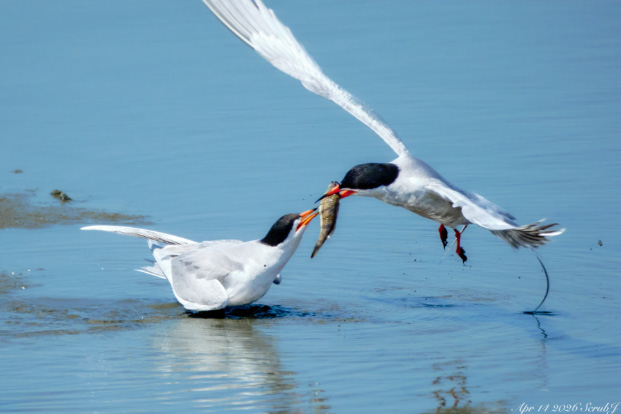
Male Forster’s tern (right) handing his partner a freshly captured fish (Huntington Beach area).
Parenting starts much earlier than when the child is born. For birds, building a nest is already part of the preparation process. The lining of nests is a multi-level project, involving different textures of materials for insulation and comfort. Around campus this season, you can see ravens flying overhead with twigs in their beaks, dark-eyed juncos hopping around the (yellowed for good reasons) lawn collecting grass, and robins tugging at your dog’s fur while it naps on the balcony. All of these collections are necessary!
Feeding is another important part of parenting. For many bird parents, while one bird continuously incubates the eggs (usually the mother), the other parent must hunt and gather food for the one staying at home. This becomes a direct test of hunting skill, but don’t worry – the females have often already tested their partner’s abilities before child rearing even begins. Females frequently receive gifts (usually food items) from males during courtship. Terns, for example, are known for their swift flights and dramatic dives into the ocean for hunting. If you see a pair of adult terns exchanging fish, that may actually be part of their engagement negotiation. For mammals such as seals, mothers must gain tremendous amounts of weight in advance so they can later provide rich milk for their pups.
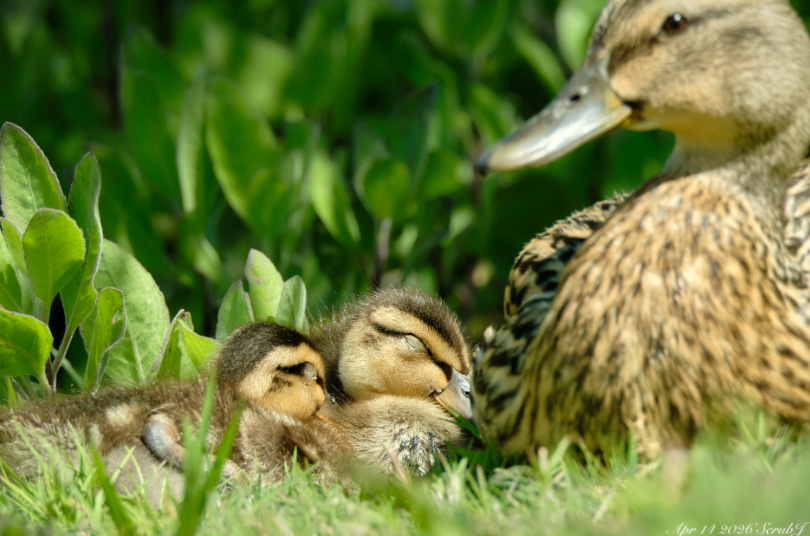
Mallard mother with her ducklings cuddled cozily next to her.
Then, when the young are born, some parents need to leave for extended hunting trips. This spring, I went to Hawaii to visit one of my target species, the Laysan albatross. These birds mate for life and rear only one chick each season. One parent may travel thousands of miles across the Pacific Ocean to search for food while the other stays behind to guard the chick. It remains a mystery how they navigate the open ocean for days or weeks, then return precisely to the same nesting colony and recognize their partner and chick among thousands of nearly identical birds. This is still ongoing research in the field.
Another source of parenting intensity comes from the sudden shift in behavior that can seem completely opposite to the animals’ “normal instincts.” If you have visited parks with ponds, you have probably noticed mallard ducks, the most widespread wild duck in the world. Part of their popularity comes from their eagerness to exploit every feeding opportunity, from grass to discarded bread and even trash. When they see someone standing near the bank, they eagerly swim over while loudly quacking, summoning every nearby duck into a chaotic crowd, fully prepared to shove aside their conspecifics for a better chance at food. (In fact, classic studies of ducks feeding at ponds helped inspire early theories of foraging behavior and competition.) But once the ducklings hatch, the priorities completely change. The formerly loud and aggressive adults now guard their babies closely, float quietly beside them, and remain constantly vigilant while the ducklings chirp and enjoy the banquet.
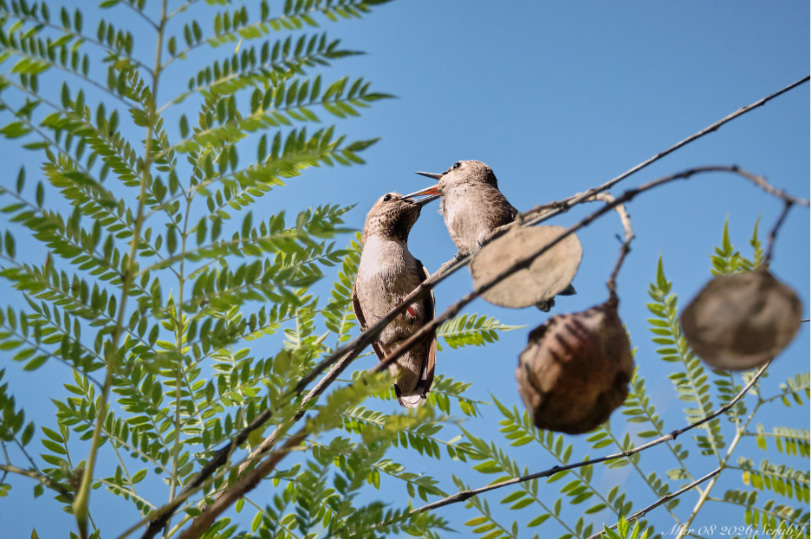
Just a month ago, Anna’s hummingbird mother raised two fledglings on Caltech campus.
The prioritization of the young continues even after they become juveniles. During this time of the year, there seem to be adult birds everywhere, but if you look closely, many of the rotund “adults” are actually juveniles still begging their parents for food. The fox squirrels, almost as large as adults, will still cuddle to their mothers for milk. The new fledglings readily flutter their wings and chirp incessantly while following exhausted parents around. But parental tolerance lasts only for a limited time. Very soon, these youngsters become direct competitors for the same food resources, and the parents may fiercely chase them away from their territories if necessary. (Perhaps this is also how young scientists must eventually carve out their own niche and compete with their former mentors.)
In many parts of the animal world, both parents play important roles in raising the next generation. Parenting can involve construction work, food delivery, defense, sacrifice, and endless patience. And although the details differ across species, the underlying challenge feels surprisingly familiar: how to prepare the one you love to survive in a difficult world, and then eventually let them go.
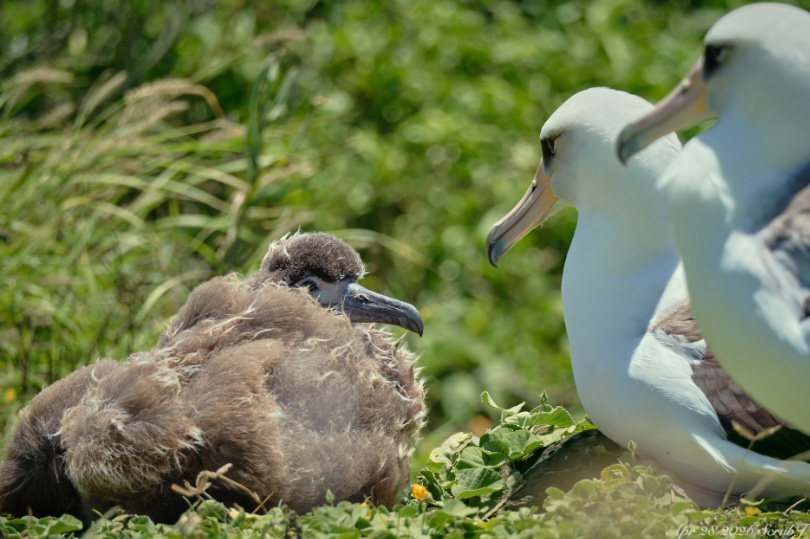
Laysan albatross parents and their chick (only child) of the season.
All photos courtesy of Jieyu Zheng.
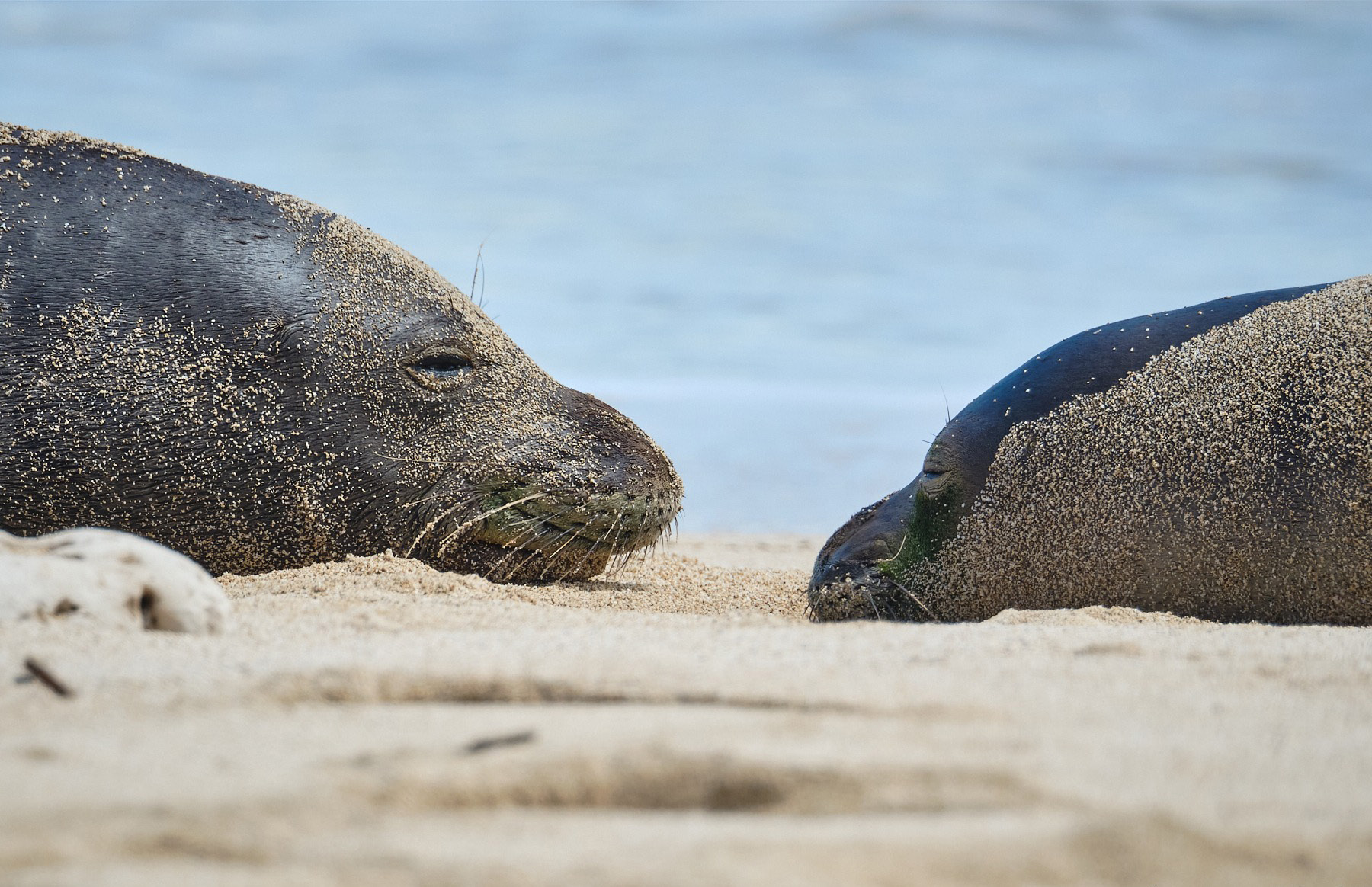
Hawaiian monk seal mother (left) and her pup.