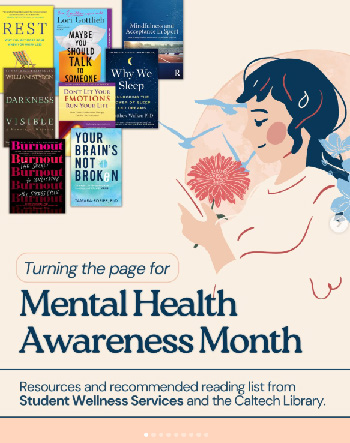
The Invisible — On Mental Health Awareness Month
The Body That Betrayed Me, the Mind That Wouldn’t Stop
There is a specific kind of silence that lives inside high-achieving students. It is not the silence of a quiet library or a sleeping dorm room. It is the silence of a mind that has been running for so long, so loudly, that the noise has become indistinguishable from who you are. You are not able to shut it off, you struggle falling asleep, you feel nothing every single day.
I grew up in Verona — the city of Romeo and Juliet, but the love story I was living was not the one tourists came to see. Mine was a quieter, more dangerous romance: a love affair with perfection. By fifteen, I weighed less than the textbooks I carried. I had a system for everything. The number of times I read a chapter before I trusted myself to have understood it. The number of bites I was allowed to take before the food on my plate became too much, before it became a moral failure, before it became proof that I was losing control of the only thing I believed I could control: myself.
This is the part of my Caltech application I tucked into the “Additional Information” section, in 150 careful words. At 15, I battled with anorexia. That was the sentence. Tidy. Past tense. Already healed.
But Mental Health Awareness Month — observed every May, this year under NAMI’s theme “In Every Story, There’s Strength” — exists precisely because the past tense is a lie we tell to make other people more comfortable. So this month, I am writing the sentences I did not put in my application. I am writing about the perfectionism that came before the eating disorder, and the obsessive-compulsive rituals that came with it, and the way all of it became a single, invisible architecture inside me — the kind of disability you carry to class, to lab, to the dining hall, and that no one, no one, can see.
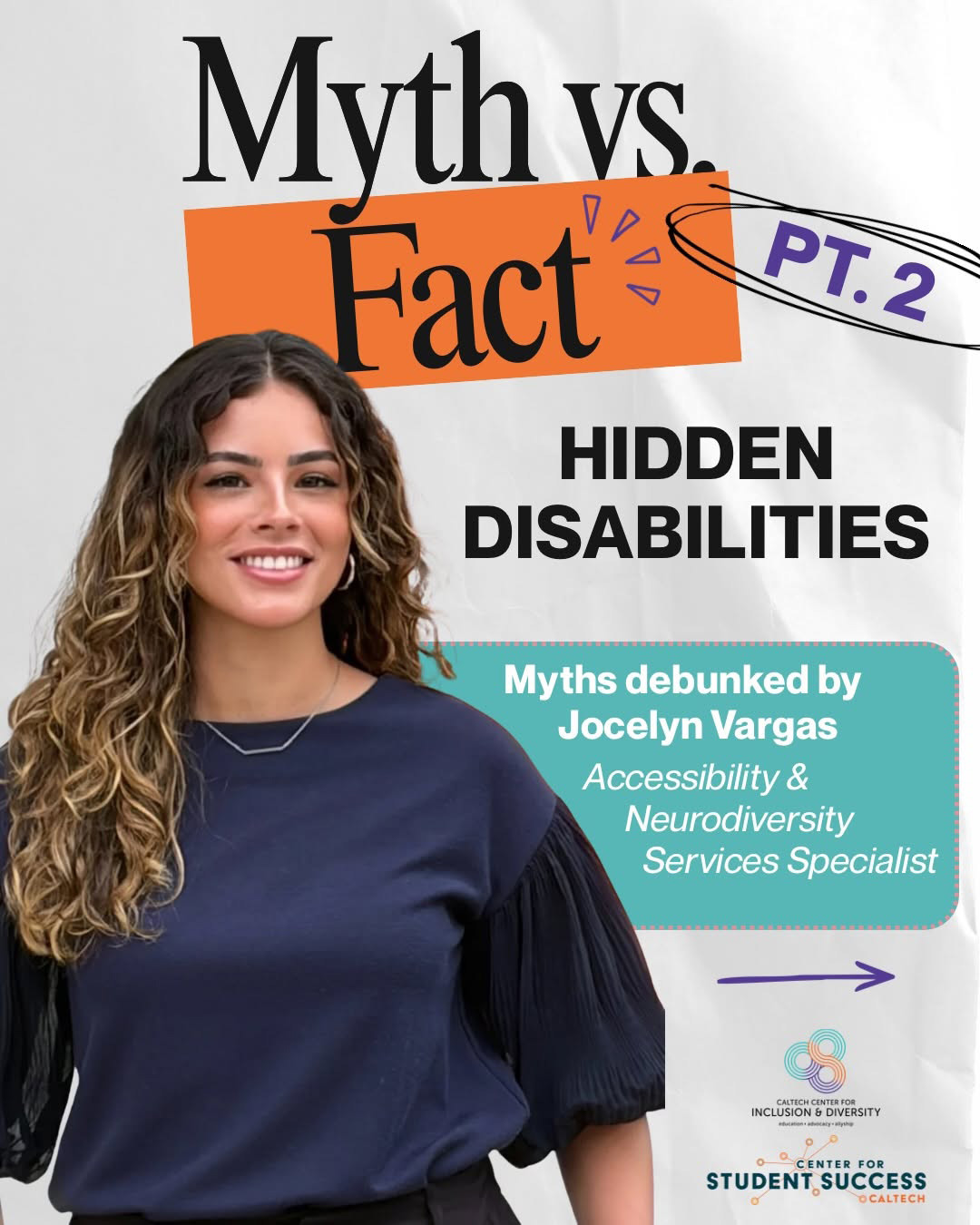
II. The Disability You Cannot See
The U.S. Department of Education estimates that roughly 21% of American undergraduates report a disability, and the majority of those disabilities are invisible — mental health conditions, learning differences, chronic illness, neurological disorders (BestColleges). The Invisible Disabilities Association defines an invisible disability as “a physical, mental or neurological condition that is not visible from the outside, yet can limit or challenge a person’s movements, senses, or activities.”
Harvard Health estimates that invisible illness affects roughly 10% of the 61 million Americans living with a condition that limits their daily lives (Harvard Health). And among college students specifically, the United Health Group’s 2026 survey found that 69% of college students experienced a mental or behavioral health concern in the past year (UnitedHealth Group). But statistics, as a Caltech student, I have learned, are how we make ourselves feel rigorous about things we are too afraid to feel directly.
So let me translate.
One in five of the people you passed walking from Avery to Caltech hall this morning is carrying something. We are everywhere. And we are very good at hiding.
III. Perfectionism Is Not a Personality Trait. It Is a Symptom.
I want to be precise here, because precision is — fittingly — both a gift and a prison.
There is a growing body of research, summarized in a 2022 paper in Frontiers in Psychology, showing that maladaptive perfectionism is a transdiagnostic mechanism linking obsessive-compulsive disorder, anorexia nervosa, anxiety, and depression. The same study notes that perfectionism actively mediates the development and persistence of these conditions.
Another study published in Eating and Weight Disorders found that high academic achievement is associated with elevated risk of eating disorders, and that perfectionism is the bridge between the two. The very traits that made me good at school — the discipline, the obsessive attention to detail, the refusal to accept anything less than total mastery — were the same traits that were quietly killing me.
The Society for the Advancement of Psychotherapy puts it bluntly: anorexia nervosa is “highly comorbid” with OCD, anxiety disorders, and depression, and perfectionism is the thread that ties them together. Because here is what people who have never lived inside a perfectionist mind do not understand: perfectionism is not ambition. Ambition is a fire. Perfectionism is a cage made of fire. You are not chasing excellence; you are running from a version of yourself you have decided is unacceptable. Every A is not a triumph but a brief, conditional reprieve. Every B is not a setback but a referendum on your right to be worthy, to deserve something.
And when you cannot control your grades, you turn to the one variable left in the equation. Your body.
IV. The Things You Do Not See
The eating disorder was the visible part. Eventually. After my body collapsed in school and the secret could no longer be kept by my too-large sweaters and my elaborate excuses about already having eaten. But the OCD lived underneath it, older and quieter and far more persistent. The OCD was the engine. The eating disorder was just the smoke. The things people did not see:
The way I had to read every line of a textbook twice — not because I did not understand it, but because if I did not, I would have not gotten the best result in the exam. I did not believe this, exactly. But I could not not believe it.
The way I counted my steps from the piazza to my front door, and if the number was wrong, I would walk around the block until it was right.
The way I rewrote my notes three times — once in pencil, once in blue, once in black — because the wrong color on the wrong day meant I had not really learned the material.
The way I weighed every bite of food in grams, in calories, in moral worth, until eating became a mathematics problem I could not solve without failing.
The way I had to take a perfect grade in every single class, presentation and exam otherwise I would have felt meaningless.
This is what the International OCD Foundation calls “invisible compulsions” — the rituals that happen entirely inside the mind, that leave no trace, that cannot be seen by parents or teachers or roommates or admissions officers. They are exhausting in a way that has no English word. In Italian we sometimes say logorante — something that wears you down, grinds you to dust, while you are smiling and acing your exams.
V. Verona, the Hospital, and the Sun That Was Not the Sun
In my Caltech essays I wrote about the city-wide blackout in the piazza, about realizing that life held more than solitary knowledge, about my mother’s neurological collapse and my brother’s surgery and how love became the language I learned to speak. All of that is true.
But I did not write about what happened to me, inside me, during those years. I did not write that while I was caring for my mother — adjusting her pillows, decoding her medication schedule, joking that her forgetfulness was like Dory in Finding Nemo — I was simultaneously refusing food, counting calories, hiding in bathrooms, and recalculating the precise number of laps I needed to walk around the hospital corridor before I was allowed to sit down beside her.
I did not write that the most invisible disability of all is the one you develop while caring for someone else’s visible one. That a fifteen-year-old girl tending to her mother’s frightened body can also be a fifteen-year-old girl losing her own, and that no one will notice because everyone is, understandably, looking at the mother.
VI. What Caltech Does Not Know About Us
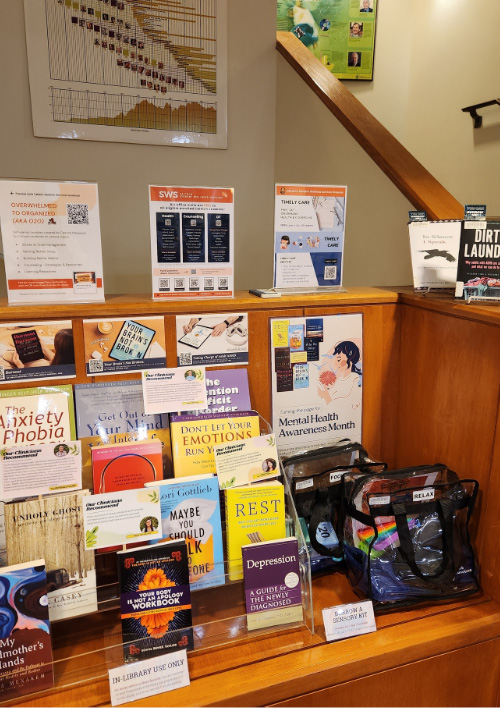
Caltech has a Student Wellness Services office, and a counseling team, and a Mental Health Resources hub that links to the Jed Foundation, and a new phone number — (626) 395-8331. These resources matter. But what Caltech — and Columbia, and Brown, and Princeton, and every institution that takes students like me and lights us on fire and calls it education — what these places do not always understand is that the students most likely to be suffering are the students least likely to ask for help.
A landmark study by Suniya Luthar at Arizona State University found that students at high-achieving schools experience clinical depression, anxiety, and substance abuse at rates 3 to 7 times higher than the national average Suncloud Health summary. At places like Caltech — where the median student was the smartest person in their high school, where failure is structurally engineered into every problem set, where everyone around you is so impressive that your own suffering feels like an embarrassment to admit — this number is almost certainly higher. This is simply a very wrong structure.
We do not ask for help because asking would mean admitting that the engine that got us here is also the engine that is destroying us. We do not ask for help because the same perfectionism that landed us at Caltech tells us that real Caltech students do not need counseling — they need more sleep, more discipline, more mastery, more, more, more.
This is a lie. And Mental Health Awareness Month exists to puncture it.
VII. What Recovery Actually Looks Like (Hint: Not a Triumphant Essay Ending)
I want to resist the urge — the deeply ingrained, application-essay-shaped urge — to wrap this up with a redemption arc. To tell you that I am healed. That horse riding saved me (it helped). That literature saved me (it helped). That my family’s love saved me (it helped). That I am now a perfectly recovered, perfectly grateful, perfectly functional Caltech student.
THAT IS ABSOLUTELY NOT TRUE
The truth is that recovery from an invisible disability is a daily, hourly, sometimes minute-by-minute negotiation with a brain that, occasionally, or continuously tries to convince you that your worth is contingent on a number — a grade, a weight, a GPA, a count of intrusive thoughts you have successfully ignored. The truth is that I still sometimes recount my steps. That I still sometimes look at a plate of food and feel a faint, familiar fear. That I feel like I am defined by my GPA, which definitely sophomore year did not help. But the truth is also this: I no longer believe the brain that tells me these things. I have learned, slowly and imperfectly, to treat that voice the way a researcher treats a hypothesis that has been falsified — with curiosity, not obedience.
This is what NAMI means when they say “In Every Story, There’s Strength.”
Strength is not the absence of the struggle. Strength is the refusal to let the struggle have the last word.
To you reader,
If you are reading this, and you recognize yourself in it — if your perfectionism has begun to feel less like a virtue and more like a hand around your throat, if your relationship with food or sleep or your own body has become a battlefield, if you are achieving everything and feeling nothing — I want you to know three things.
First, you are not alone. You are not the only Caltech student carrying this. You are not the only person in your study group, your lab, your house. The data says one in five of us is carrying something. The honest truth is probably higher.
Second, invisibility is not a strength. It is a symptom. The same culture that taught you to hide it is the culture that is, slowly, killing you. You do not owe anyone the performance of being fine.
Third, you can tell one person — one professor, one friend, one RA, one TA, one stranger. You do not have to have the right words. You do not have to have it figured out. You just have to break the silence by a single decibel.
Because here is what I have learned, in my long and ongoing recovery from a disability that no one can see: the moment you say it out loud — to one person, in one sentence, in one halting attempt — the architecture begins to crack. Not collapse. Just crack. And through that crack, for the first time in a long time, something gets in.
Light. Help. Another person. A future. A sun that is not a metaphor for achievement, but a sun that is, finally, just a sun.
Resources
Caltech Student Wellness Services: (626) 395-8331 — wellness.caltech.edu/counseling
988 Suicide & Crisis Lifeline: Call or text 988
NAMI HelpLine: 1-800-950-NAMI (6264) — nami.org
National Eating Disorders Association (NEDA) Helpline: 1-800-931-2237
International OCD Foundation: iocdf.org
The Jed Foundation (young adult mental health): jedfoundation.org
Sources consulted in this piece include NAMI’s 2026 Mental Health Awareness Month toolkit, SAMHSA, the Invisible Disabilities Association, Harvard Health Publishing, peer-reviewed research on perfectionism comorbidity and academic achievement and eating disorders, and the United Health Group 2026 survey on college mental health.